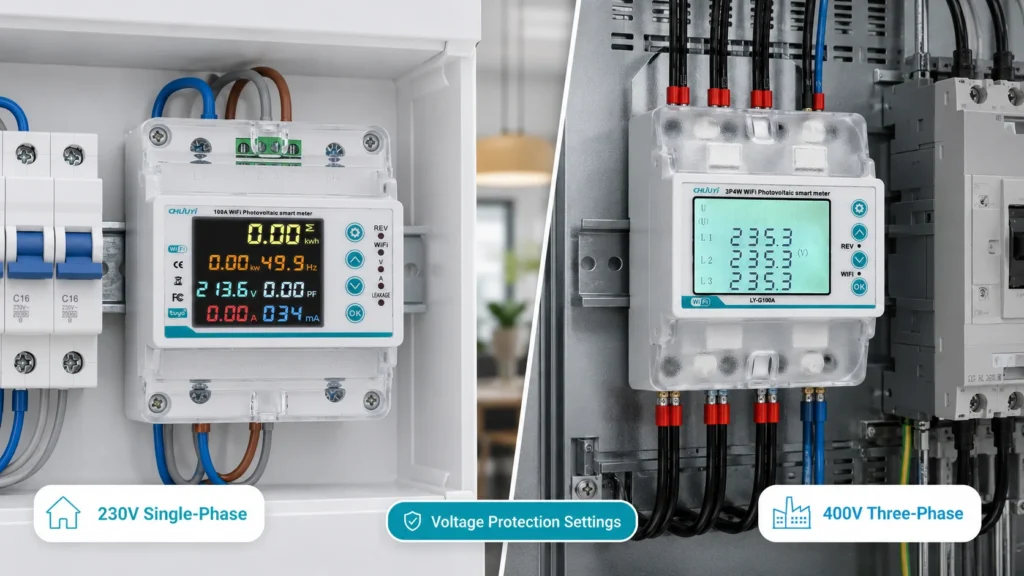
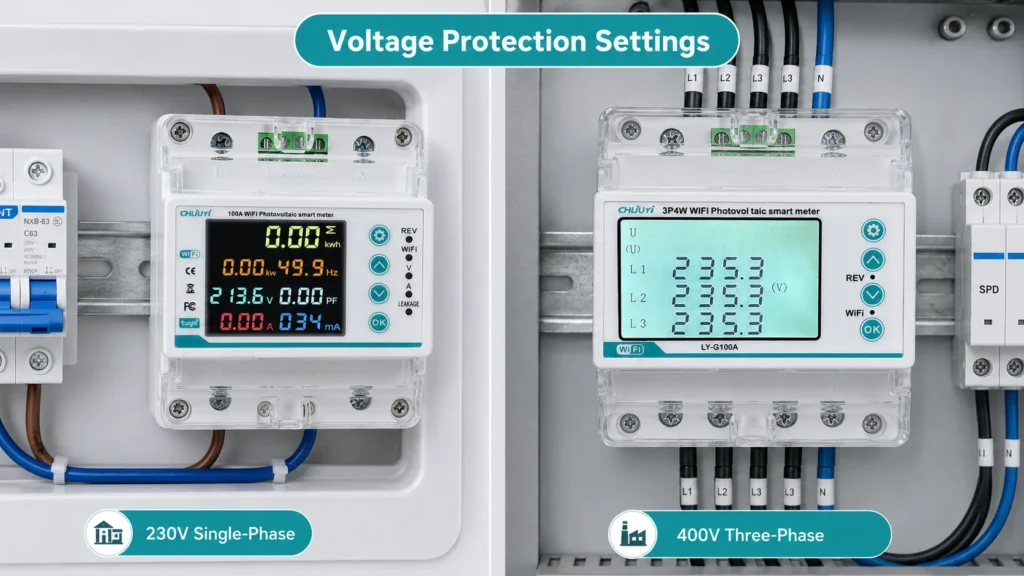
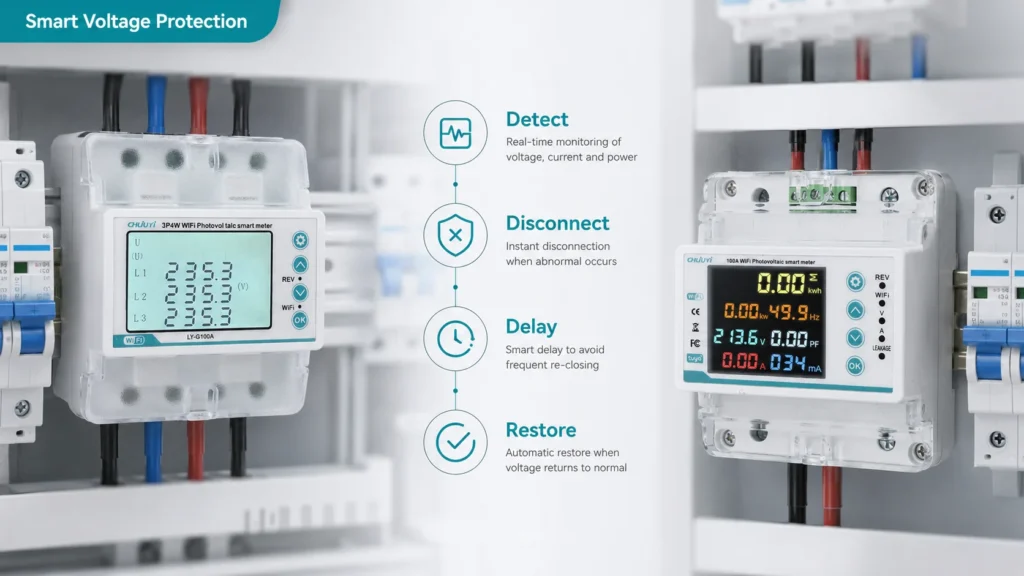
Voltage instability can damage appliances, interrupt industrial operations, and increase maintenance costs. Correct overvoltage and undervoltage protector settings help disconnect a circuit when voltage moves outside a safe operating range, reducing the risk of overheating, repeated motor starting, and premature equipment failure.
For 230V single-phase and 400V three-phase systems, the correct settings depend on the nominal supply voltage, connected load, grid stability, and equipment tolerance. This article explains how to configure an adjustable voltage protector without setting thresholds too tight or too loose.
Parameter setup and wiring should be completed by a qualified electrician according to local electrical requirements.
What Does an Overvoltage and Undervoltage Protector Do?
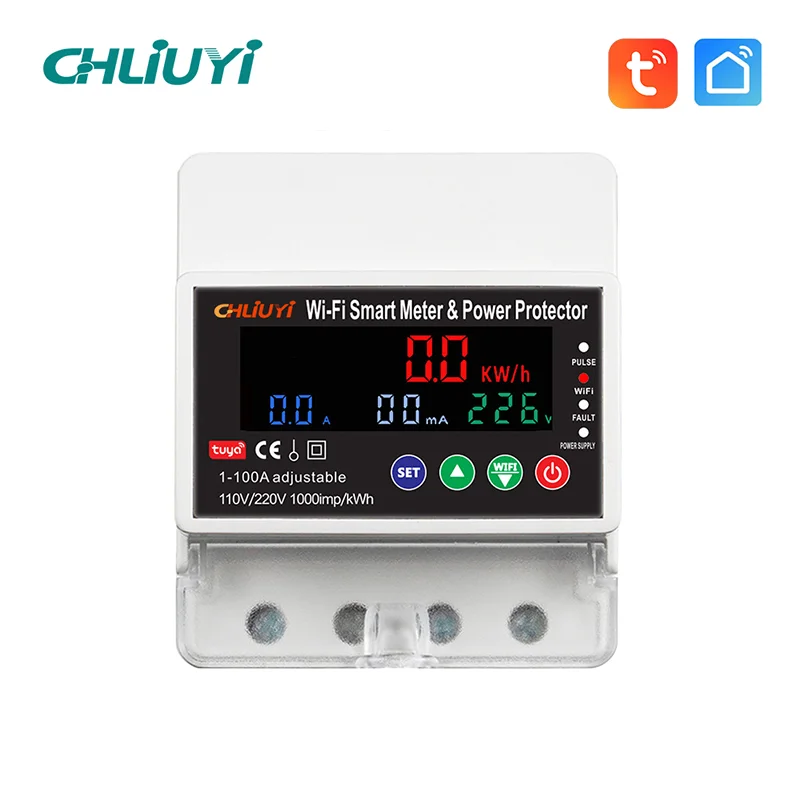
An adjustable overvoltage and undervoltage protector monitors the voltage supplied to a circuit.When the voltage rises above the configured upper limit or falls below the configured lower limit, the device disconnects the load.
After the power supply returns to a stable range, an automatic-reset protection device can restore power after the programmed reconnect delay.
These devices are commonly used in:
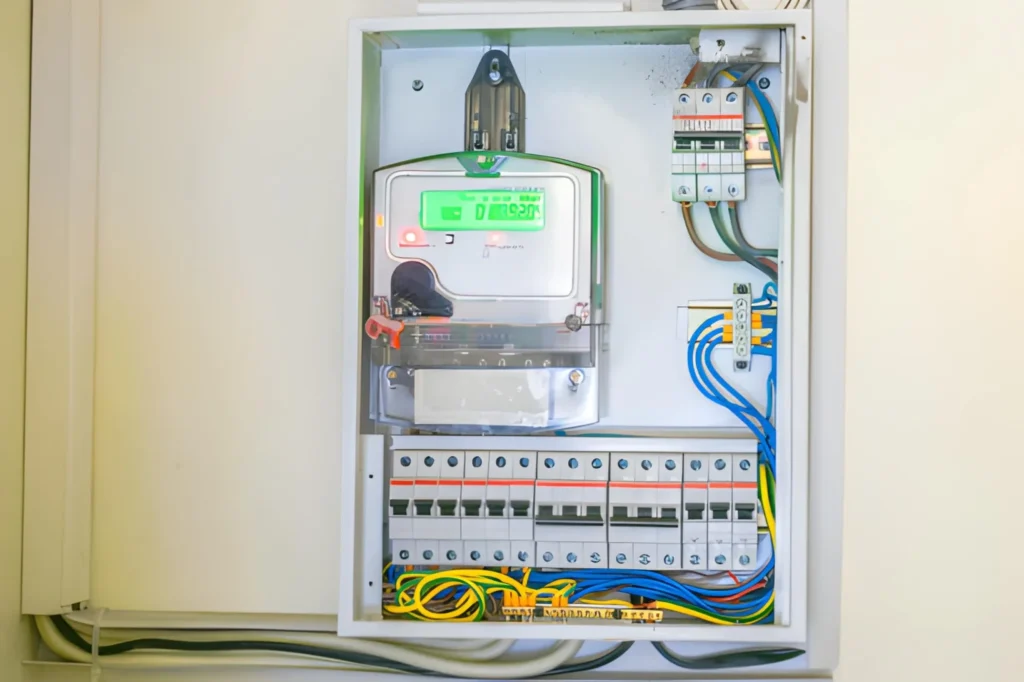
Residential and commercial distribution boards
Pumps, fans, compressors, and HVAC systems
Refrigeration equipment
Industrial control cabinets
Workshop machinery
Solar and energy-storage installations
Sensitive electronic equipment
An overvoltage and undervoltage protector is designed for sustained abnormal voltage conditions. It does not replace a surge protective device (SPD) used for lightning-related or transient voltage spikes.
Overvoltage and Undervoltage Protector Settings: Four Parameters to Check
Before configuring the device, understand the main adjustable parameters.
Overvoltage Trip Value
The overvoltage trip value is the highest voltage allowed before the protector disconnects the circuit.
When the actual voltage remains above this value longer than the configured trip delay, the device cuts off power to help protect connected equipment.
Undervoltage Trip Value
The undervoltage trip value is the lowest acceptable voltage before the protector disconnects the circuit.
Low voltage can be particularly harmful to motors, pumps, compressors, and other inductive loads. It may cause overheating, low torque, poor starting performance, or excessive current draw.
Trip Delay
Trip delay is the time the device waits before disconnecting the load after detecting abnormal voltage.
A very short delay provides faster protection, but it can also cause nuisance trips during brief fluctuations. A longer delay can improve operating stability but may leave equipment exposed to abnormal voltage for a longer period.
Reconnect Delay
Reconnect delay is the waiting period before the protector restores power after voltage returns to normal.
This setting is especially important for compressors, refrigeration systems, pumps, and motor-driven equipment. Immediate restart after a voltage fault can cause high inrush current and repeated mechanical stress.
What to Check Before Setting a Voltage Protector
Do not apply the same settings to every project. Confirm the following conditions first.
Check the Rated Supply Voltage
Identify whether the system is:
220V or 230V single-phase
380V, 400V, or 415V three-phase
Three-phase three-wire
Three-phase four-wire
The selected protector must match the voltage system and wiring method.
If you are unsure about the wiring configuration, review the differences between single-phase and three-phase power systems before selecting a protector.
Check the Type of Load
Different loads react differently to voltage changes.
For example:
Lighting circuits may tolerate short voltage variation.
Motors and compressors are more sensitive to low voltage and frequent restarting.
Electronic equipment may need tighter voltage control.
Industrial machines may require phase-loss and phase-sequence protection.
Measure Actual Grid Voltage
Measure the normal supply voltage during different operating periods, especially during peak load conditions.
When the local grid frequently fluctuates close to the protection threshold, the device may trip repeatedly. The settings should allow normal voltage variation while still protecting the load from harmful conditions.
Review Equipment Requirements
Check the voltage tolerance stated by the equipment manufacturer.
The correct threshold should be based on the actual acceptable operating range of the connected equipment, not only the nominal system voltage.
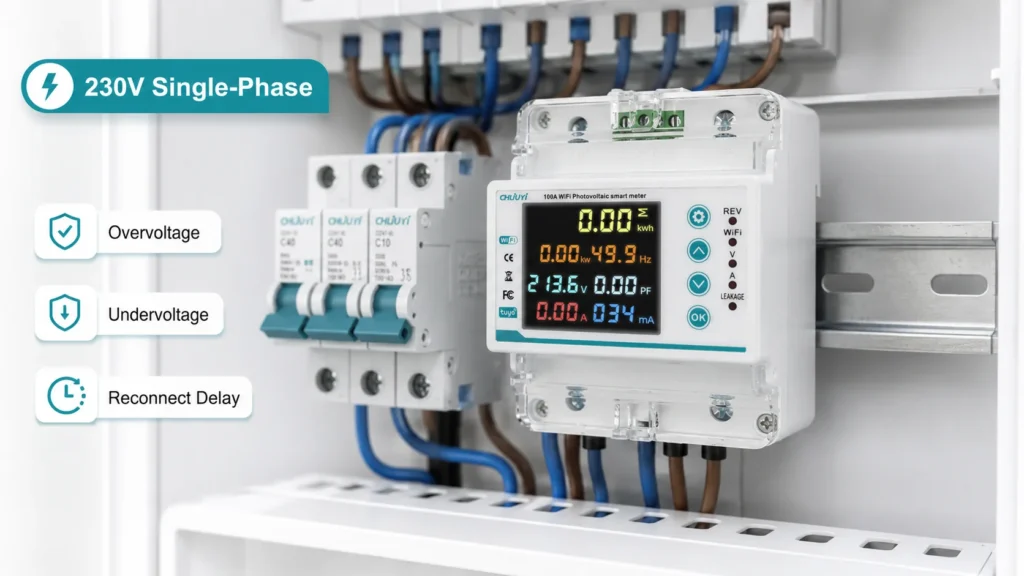
Overvoltage and Undervoltage Protector Settings for 230V Systems
A 230V single-phase system is common in residential, commercial, and light industrial applications. Typical loads include lighting, household appliances, pumps, small HVAC equipment, workshop tools, and control devices.
The following values can be used as general starting references for a 230V adjustable voltage protector.
Parameter
Typical Starting Range
Purpose
Overvoltage setting
250V–255V
Helps protect against sustained high voltage
Undervoltage setting
190V–205V
Helps reduce low-voltage stress on equipment
Trip delay
1–10 seconds
Helps avoid unnecessary trips from brief fluctuations
Reconnect delay
Based on load type
Prevents immediate restart after voltage recovery
These values should be adjusted according to the actual grid condition and connected equipment.
For example, lighting circuits may use a shorter reconnect delay. Refrigerators, air conditioners, water pumps, and compressors usually require a longer delay to avoid repeated restarting.
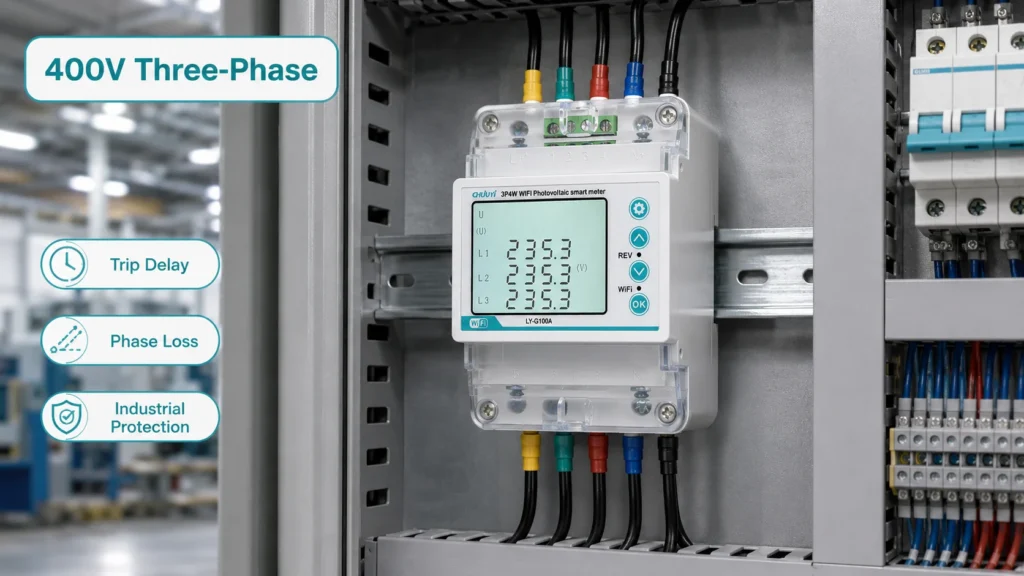
Overvoltage and Undervoltage Protector Settings for 400V Systems
A 400V three-phase system is widely used for motors, compressors, pumps, HVAC equipment, factory machinery, and commercial distribution panels.
In addition to voltage thresholds, many projects require three-phase overvoltage and undervoltage protectors with phase-loss, phase-sequence, and phase-imbalance protection.
Parameter
Typical Starting Range
Purpose
Overvoltage setting
430V–440V
Helps protect three-phase equipment from high voltage
Undervoltage setting
340V–360V
Helps reduce low-voltage motor stress
Trip delay
1–10 seconds
Filters brief voltage fluctuations
Reconnect delay
Based on load type
Allows stable recovery before restart
Phase-loss protection
Enable when required
Helps protect three-phase motors
Phase-sequence protection
Enable for rotating loads
Helps prevent reverse motor rotation
For a 400V system, one parameter set will not fit every load.
A motor-driven pump, refrigeration compressor, or production machine may need different protection logic from a general lighting or distribution circuit. Always confirm whether the selected device monitors phase-to-phase voltage, phase-to-neutral voltage, or both.
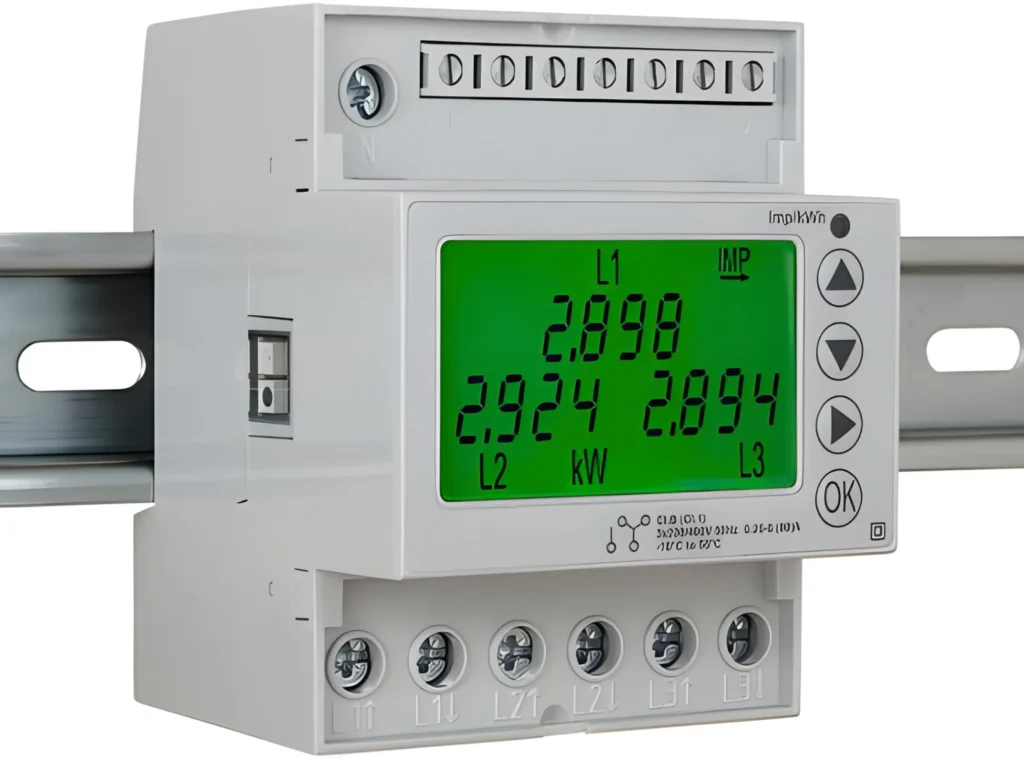
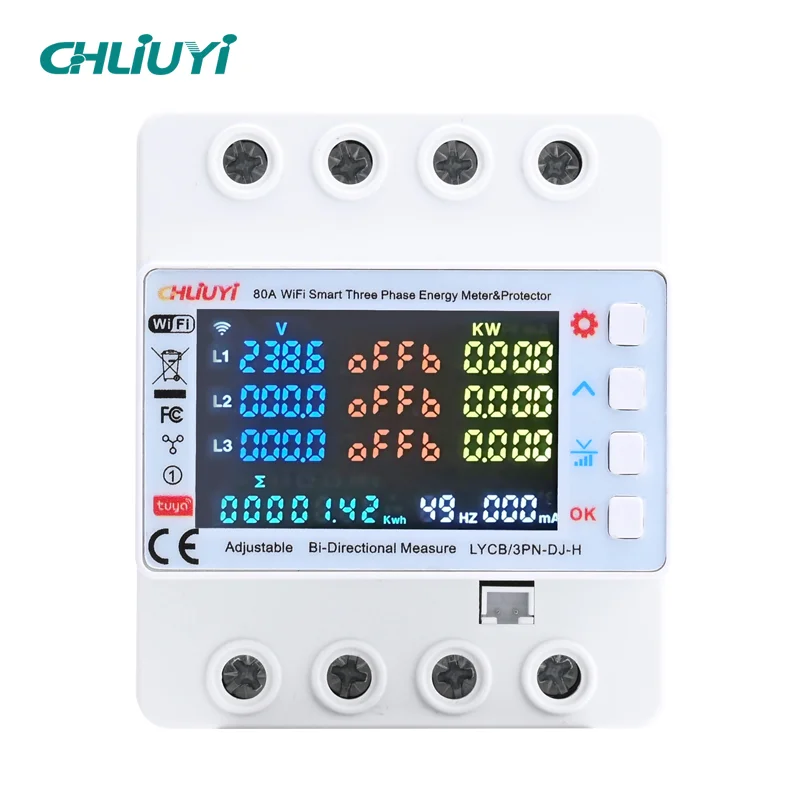
For projects requiring remote monitoring, a 3 Phase WiFi voltage protector with smart energy metering can combine voltage protection, current monitoring, energy metering, and remote control functions in one device.
How to Set Trip Delay and Reconnect Delay
Trip delay and reconnect delay should be matched to the load behavior.
For sensitive electronic equipment, a shorter trip delay may be preferred because the load can be affected quickly by abnormal voltage.
For motors and compressors, the protection strategy should focus on reducing repeated restart cycles. A suitable reconnect delay allows the system to stabilize before power is restored.
Consider the following principles:
Use short delays carefully where fast protection is needed.
Avoid excessively short delays where normal voltage dips occur frequently.
Use a longer reconnect delay for compressors and refrigeration systems.
Test the system after installation to confirm that normal voltage variation does not cause repeated trips.
The goal is not to make the protector react as fast as possible. The goal is to disconnect equipment only when voltage conditions become harmful.
Common Setting Mistakes to Avoid
Setting the Undervoltage Limit Too High
If the undervoltage threshold is too close to the normal operating voltage, the protector may disconnect the circuit during normal voltage dips.
This can cause unnecessary downtime and repeated restart cycles.
Setting the Overvoltage Limit Too High
If the upper voltage threshold is too high, equipment may remain connected during a harmful overvoltage condition for too long.
The setting should match the voltage tolerance of the load.
Ignoring the Reconnect Delay
Automatic reset is useful, but immediate power restoration is not always safe.
Compressors, pumps, motors, and refrigeration equipment may be damaged or stressed by frequent restarting after short voltage interruptions.
Using a Voltage Protector as a Surge Protector
An overvoltage and undervoltage protector does not replace a surge protective device.
For stronger distribution board protection, many projects use both:
A voltage protector for sustained overvoltage and undervoltage conditions
A surge protective device for lightning and transient voltage spikes
How to Choose an Adjustable Voltage Protector
When selecting an adjustable overvoltage and undervoltage protector, check the following requirements:
Rated system voltage
Single-phase or three-phase configuration
Rated current and load capacity
Number of poles
DIN rail mounting requirement
Adjustable overvoltage and undervoltage range
Trip delay and reconnect delay functions
Automatic reset or manual reset mode
Phase-loss and phase-sequence protection
WiFi, remote control, or energy monitoring functions
OEM and ODM customization requirements
For intelligent distribution projects, a WiFi-enabled protector can be suitable where customers need both electrical protection and remote energy monitoring.
Conclusion
Correct overvoltage and undervoltage protector settings can help reduce equipment damage, avoid unnecessary downtime, and improve the reliability of power distribution systems.
For 230V systems, focus on actual grid voltage, connected load type, and suitable reconnect delay. For 400V three-phase systems, also consider phase loss, phase sequence, voltage imbalance, and motor operating conditions.
What is a suitable overvoltage setting for a 230V system?
For many 230V systems, an overvoltage setting around 250V–255V can be used as a starting reference. The final value should match local grid conditions and the voltage tolerance of the connected equipment.
What is a common undervoltage setting for a 230V system?
A starting range of 190V–205V may be suitable for many 230V applications. Motor-driven and sensitive loads may require more specific settings.
What settings are suitable for a 400V three-phase system?
For many 400V systems, an overvoltage range of 430V–440V and an undervoltage range of 340V–360V can be used as a starting reference. Always confirm the requirements of the equipment and local electrical standards.
Does a voltage protector protect against lightning?
No. It responds to sustained high-voltage and low-voltage conditions. A dedicated surge protective device is required for lightning-related and transient surge protection.
Can an automatic reset voltage protector restart a compressor?
Yes, but the reconnect delay should be set carefully. Compressors should not restart immediately after every voltage interruption because repeated restarting can increase electrical and mechanical stress.
Ever looked at your electricity bill and wondered, “What exactly am I paying for?” An accurate electricity energy meter is the quiet little device that answers that question, line by line, kilowatt-hour by kilowatt-hour. In this guide, we will walk through what it is, how it works, and how you can choose the right model for your home, […]
Have you noticed more customers searching for “three phase electric meter” and wondered how to turn that interest into real business? In this blog, we will walk through what a three phase electric meter is, where it is used, and how you can help your customers choose the right model with confidence. Three phase power […]
Learning how to read electric meters gives you direct control over how much energy you use and how much you pay for it. The meter tracks electricity in kilowatt‑hours (kWh), the same unit your utility uses to calculate monthly charges for homes and businesses. Whether your service is measured by an older dial‑type meter, a […]
We use cookies to enhance your browsing experience, serve personalised ads or content, and analyse our traffic. By clicking "Accept All", you consent to our use of cookies.