Energy is one of the most important operating costs for factories, commercial buildings, and industrial facilities. But in many electrical systems, energy consumption is still not clearly visible. You may know the total electricity bill at the end of the month, but you may not know which machine, production line, or distribution circuit is using the most power.
That is exactly where an industrial energy meter becomes valuable.
An industrial energy meter helps users measure, monitor, and understand electrical energy consumption in real time. It can track key electrical parameters such as voltage, current, active power, power factor, frequency, and total kWh consumption. With this data, businesses can better understand their power usage, improve energy efficiency, and support safer electrical operation.
For modern factories and commercial projects, energy monitoring is no longer just about reading a number from a meter. It is about collecting useful electrical data and turning it into better decisions. A smart industrial energy meter can connect with energy monitoring systems, PLCs, SCADA platforms, or cloud-based management systems through communication interfaces such as RS485, Modbus, or Ethernet.
Liuyi Electric provides smart energy meters for single-phase, three-phase, RS485, Modbus, DIN rail, and industrial energy monitoring applications.
In this article, we will take a closer look at industrial energy meters, including how they work, common types, key functions, and where they are commonly used.
What Is an Industrial Energy Meter?
An industrial energy meter is a device used to measure and monitor electrical energy consumption in industrial and commercial environments.
Unlike a basic household electricity meter, an industrial energy meter is usually designed for more complex electrical systems. It may support three-phase power, higher current loads, external current transformers, communication interfaces, and real-time data transmission.
In simple terms, it helps answer questions like:
How much electricity is this machine using? Which production line consumes the most power? Is the power factor too low? Is there abnormal current or voltage in the system? Can we reduce energy waste during peak hours?
These questions are important for factories, commercial buildings, data centers, power distribution rooms, solar PV systems, and automation projects.
A modern industrial energy meter does not only display numbers on a screen. Many smart models can send data to a PLC, SCADA system, cloud platform, or energy monitoring system through communication protocols such as RS485, Modbus RTU, Modbus TCP, or IoT connectivity.
How Does an Industrial Energy Meter Work?
An industrial energy meter measures electrical parameters from a circuit and calculates how much energy is being consumed.
For low-current circuits, some meters can be connected directly. For higher-current industrial loads, the meter is often used together with current transformers, also known as CTs. The CTs safely reduce the current signal so the meter can measure it accurately.
A typical industrial energy meter can measure:
Voltage
Current
Active power
Reactive power
Apparent power
Power factor
Frequency
Total energy consumption in kWh
For industrial users, the most valuable part is not just the kWh reading. The real value comes from understanding the behavior of the electrical system.
For example, a sudden increase in current may show that a machine is overloaded. A poor power factor may indicate energy inefficiency. Abnormal voltage may suggest a power quality issue. With the right meter, these problems can be detected earlier instead of waiting until equipment failure or high electricity bills appear.
Industrial Energy Meter Types for Different Power Systems
Industrial energy meters are available in different designs depending on the electrical system, installation method, communication requirements, and application scenario.
Here are the most common types.
Single-Phase Industrial Energy Meter
A single-phase energy meter is used for single-phase electrical systems. It is commonly found in small workshops, commercial units, residential distribution systems, lighting circuits, and small electrical equipment.
Although single-phase meters are often associated with residential use, they can still be useful in industrial environments where small single-phase loads need to be monitored separately.
For example, a factory may use single-phase meters to monitor office areas, lighting circuits, small machines, or auxiliary equipment.
Three-Phase Industrial Energy Meter
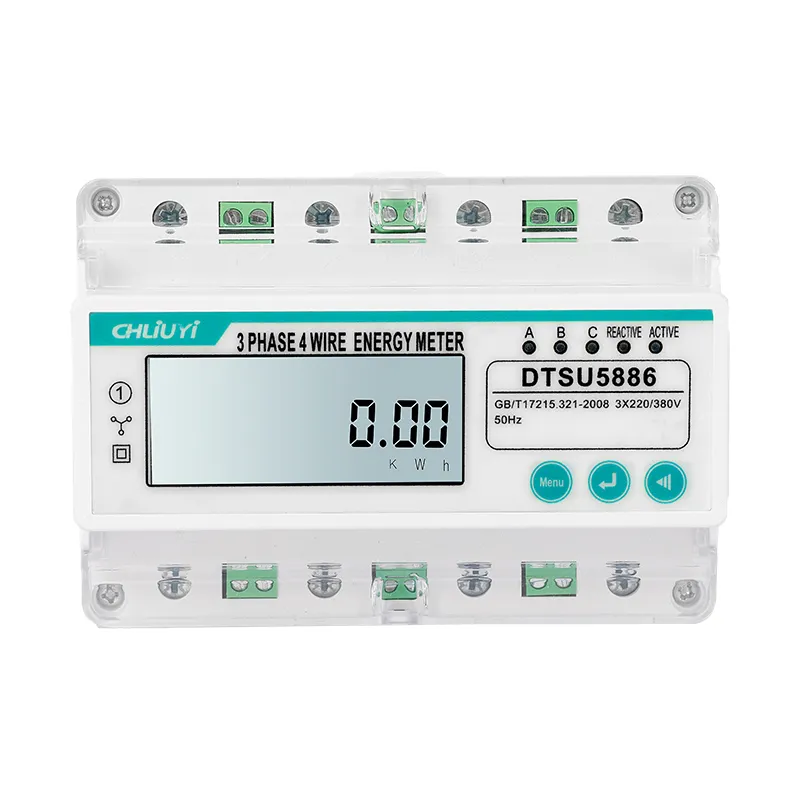
A three-phase energy meter is one of the most common choices for industrial applications.
Most factories and large commercial facilities use three-phase power because it is more suitable for heavy equipment, motors, pumps, compressors, HVAC systems, and production lines.
A three-phase industrial energy meter can monitor the power consumption of three-phase circuits and provide more detailed data for load analysis and energy management.
It is widely used in:
Manufacturing plants
Industrial control cabinets
Power distribution rooms
Motor control systems
Commercial buildings
Data centers
Solar PV systems
Production lines
If your equipment runs on a three-phase power supply, a three-phase energy meter is usually the right starting point.
Liuyi Electric’s product range includes three-phase DIN rail energy meters designed for multifunction measurement, LCD display, and high-accuracy power monitoring applications.
DIN Rail Energy Meter
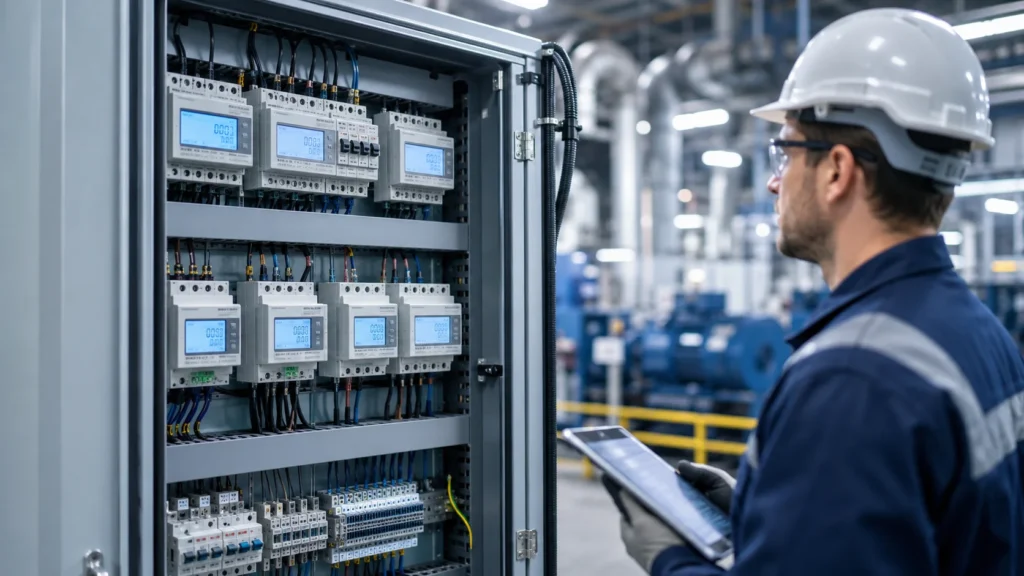
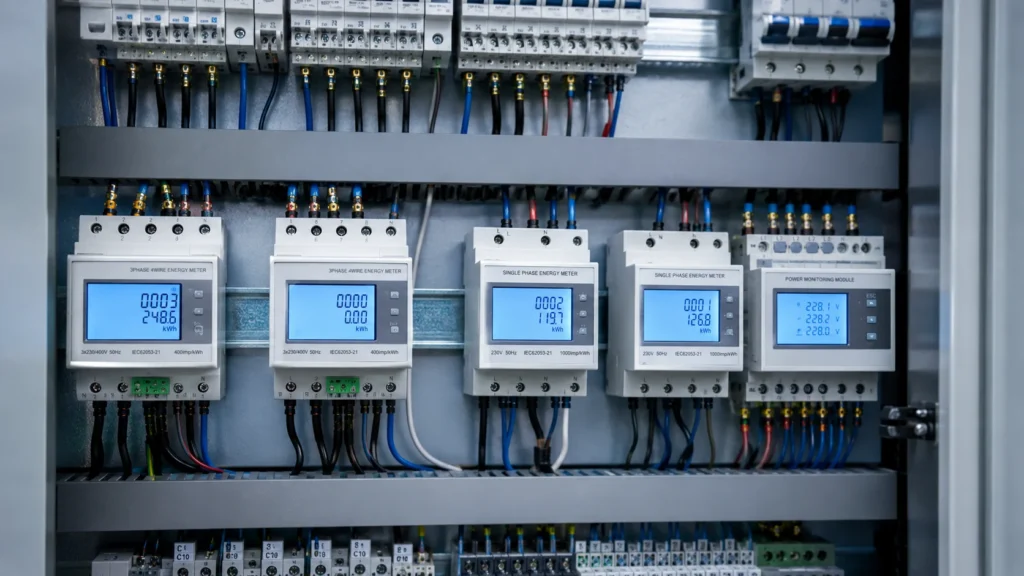
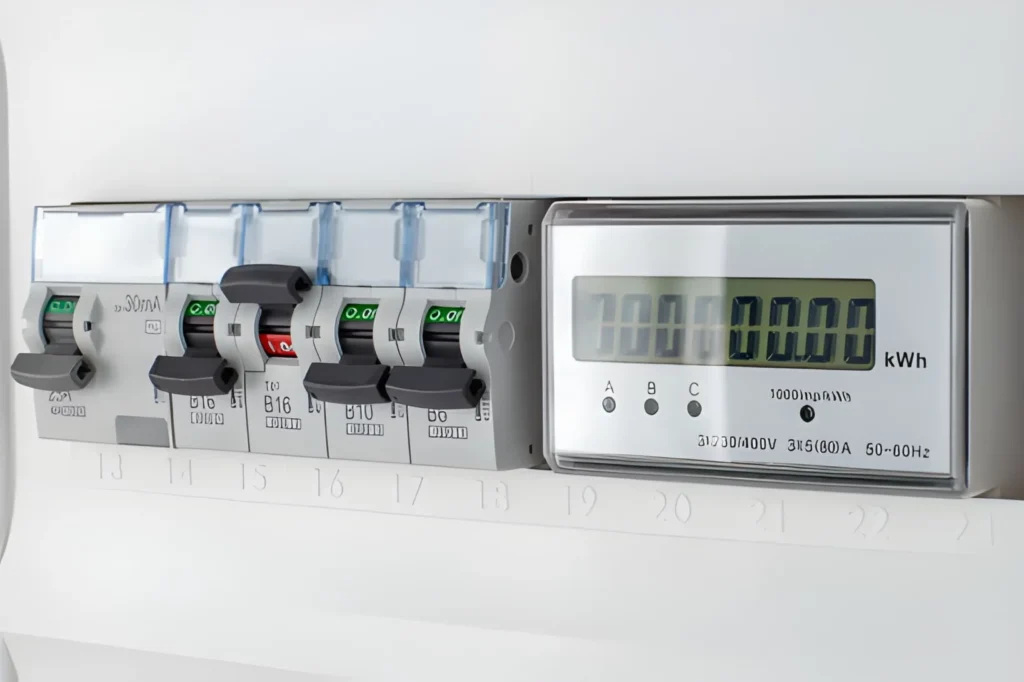
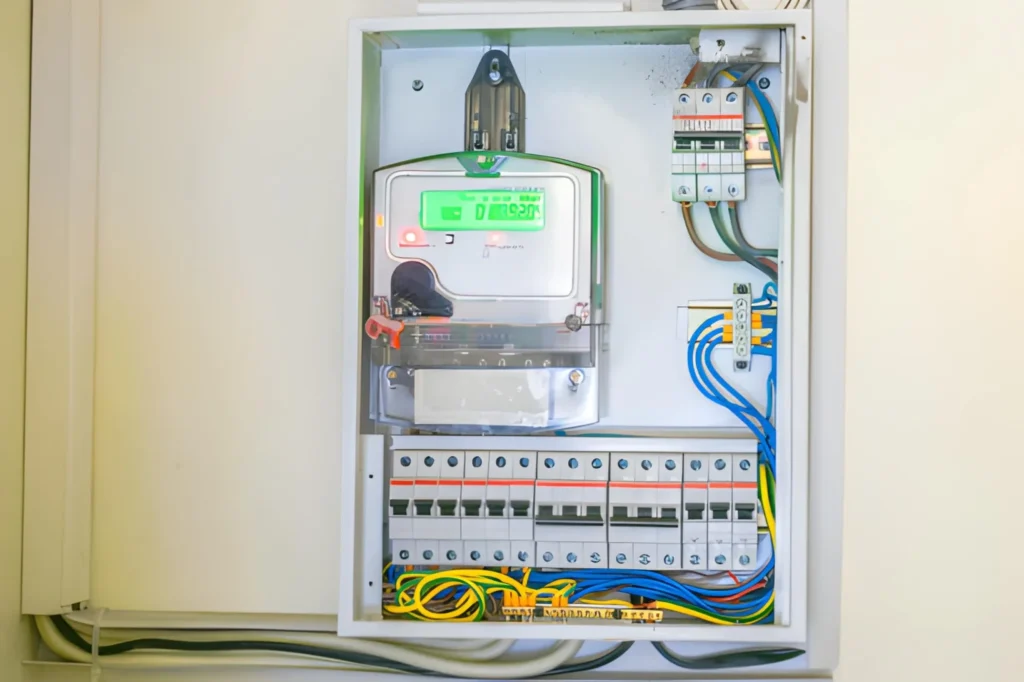
A DIN rail energy meter is designed to be installed inside an electrical distribution cabinet or control panel.
This design is popular in industrial and commercial projects because it saves space, is easy to install, and fits standard electrical enclosures.
DIN rail meters are commonly used for:
Distribution boards
Control cabinets
Sub-metering systems
Machine-level monitoring
Building energy management
Solar and energy storage systems
For OEMs, panel builders, and electrical contractors, DIN rail energy meters are especially convenient because they can be integrated neatly into existing electrical systems.
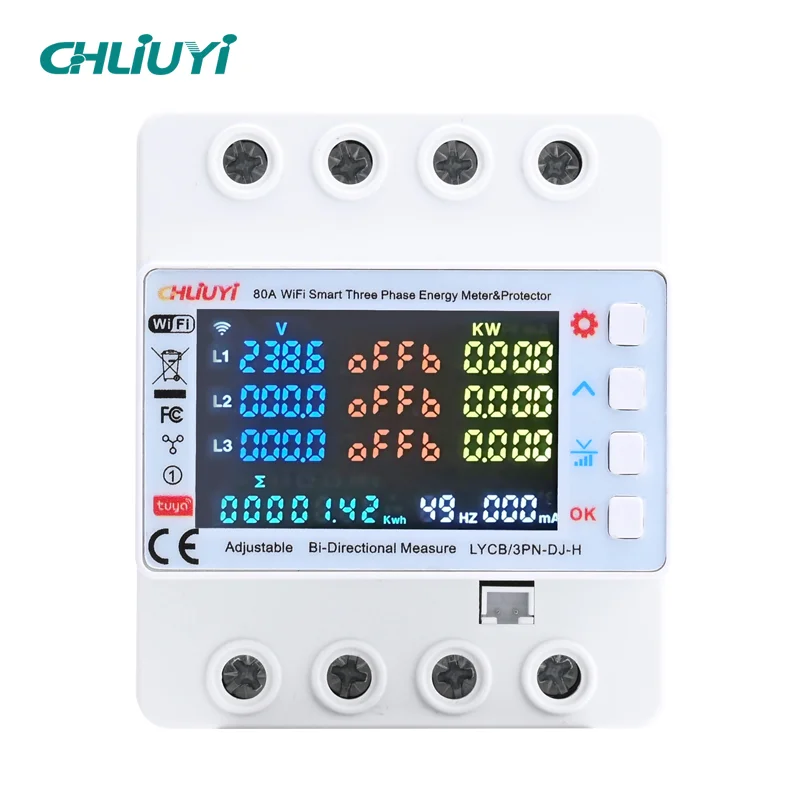
Smart Energy Meter
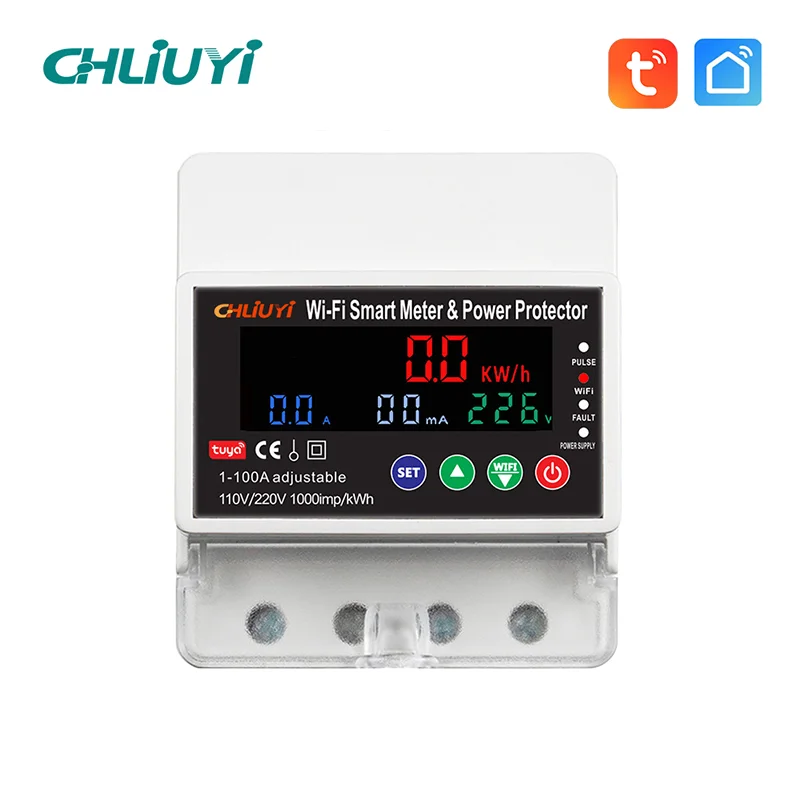
A smart energy meter is an advanced digital meter that supports data communication and remote monitoring.
Compared with a traditional meter, a smart meter can do more than display local readings. It can transmit data to an energy management platform, building management system, or industrial automation system.
Smart energy meters are useful when users need:
Remote meter reading
Real-time energy monitoring
Historical data analysis
Load management
Abnormal consumption alerts
Integration with IoT platforms
Energy-saving reports
Liuyi Electric’s smart energy meter product page highlights models including single-phase, three-phase, and RS485 communication energy meters.
RS485 and Modbus Energy Meter
For industrial projects, communication is very important. That is why many industrial users choose an RS485 energy meter or Modbus energy meter.
RS485 is widely used in industrial communication because it is stable, cost-effective, and suitable for long-distance data transmission. Modbus RTU is also commonly used in PLC, SCADA, and energy management systems.
A Modbus energy meter allows users to collect real-time electrical data from multiple meters and send it to a central system for monitoring and analysis.
This is especially useful for:
Factories
Automation systems
Power distribution monitoring
Energy management systems
Smart buildings
Solar PV projects
Multi-meter monitoring networks
If your project needs centralized monitoring, remote reading, or system integration, choosing a meter with RS485 or Modbus communication is usually a smart decision.
Liuyi Electric states that many of its smart meters support RS485, Modbus RTU, and DL/T645 communication options.
Important Electrical Data Measured by Industrial Energy Meters
A good industrial energy meter gives users a clear picture of the electrical system.
Here are some of the most important parameters.
Parameter
What It Means
Why It Matters
Voltage
Electrical pressure in the circuit
Helps detect overvoltage or undervoltage
Current
Electrical load flowing through the circuit
Shows load condition and equipment demand
Active Power
Real power consumed by equipment
Directly related to energy cost
Reactive Power
Power that does not perform useful work
Useful for power factor correction
Apparent Power
Combined active and reactive power
Helps evaluate total system load
Power Factor
Efficiency of power usage
Low power factor may increase operating cost
Frequency
Grid frequency
Helps monitor power stability
kWh
Total electrical energy consumed
Main value for billing and energy analysis
For industrial users, these values are not just technical data. They are practical indicators that help improve energy efficiency, detect abnormal loads, and support better maintenance decisions.
Where Industrial Energy Meters Are Used
Industrial energy meters are used in many different environments. Anywhere electricity needs to be measured, controlled, or optimized, an industrial energy meter can provide useful data.
Factory Energy Monitoring
Factories often have multiple machines, production lines, and distribution circuits. Without detailed monitoring, it can be difficult to know where the electricity is actually being consumed.
By installing industrial energy meters at key circuits, factory managers can understand energy usage by area, machine, or production line.
This helps identify:
High-energy equipment Inefficient production processes Unusual consumption patterns Peak demand periods Energy waste during non-production hours
For manufacturing plants, this data can support both cost reduction and production efficiency improvement.
Machine-Level Power Consumption Monitoring
Sometimes, monitoring the whole factory is not enough. Businesses may need to know how much power a specific machine or process consumes.
For example, a factory may want to compare the energy consumption of different injection molding machines, compressors, motors, pumps, or CNC equipment.
Machine-level monitoring helps users find which equipment is consuming too much energy and whether maintenance or replacement is needed.
This is especially valuable for energy-intensive industries where electricity cost is a major part of operating expenses.
Commercial Building Energy Management
Industrial energy meters are also widely used in commercial buildings such as offices, hotels, shopping centers, hospitals, and schools.
In these applications, meters can be installed to monitor lighting, HVAC systems, elevators, tenant areas, and electrical distribution panels.
With accurate sub-metering data, building managers can improve energy allocation, reduce waste, and create more transparent billing for tenants or departments.
Solar PV and Energy Storage Systems
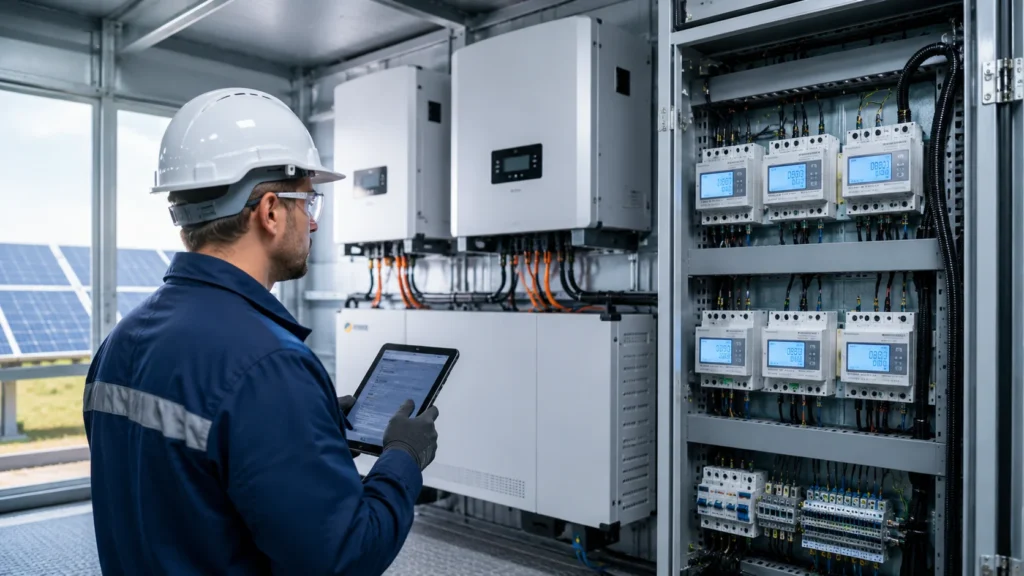
Industrial energy meters are also important in solar PV and energy storage projects.
They can be used to measure power generation, grid consumption, load demand, and energy flow between solar panels, batteries, inverters, and the grid.
In these projects, real-time metering helps users understand whether the system is working efficiently and how much energy is being consumed, stored, or exported.
Data Centers and Critical Power Systems
Data centers require stable and reliable power. Even small power problems can lead to costly downtime.
Industrial energy meters can monitor UPS systems, power distribution units, server room circuits, and backup power systems.
By tracking current, voltage, load balance, and energy consumption, data center operators can improve power reliability and avoid overload risks.
Liuyi Electric also describes industrial facilities, data centers, and power distribution rooms as important application scenarios for smart energy meters.
Why Industrial Energy Meters Matter
Installing an industrial energy meter brings more than basic electricity measurement. It gives businesses the data they need to make better decisions.
Reduce Energy Costs
You cannot reduce what you cannot measure.
An industrial energy meter helps businesses identify where electricity is being used and where it may be wasted. Once high-consumption areas are found, companies can adjust operating schedules, improve equipment efficiency, or optimize peak-hour usage.
Over time, these changes can help reduce electricity bills.
Improve Energy Efficiency
Energy efficiency is not only about using less electricity. It is about using electricity more intelligently.
With real-time monitoring data, users can compare different machines, production lines, or building areas. This makes it easier to find inefficient equipment or processes.
For factories and commercial buildings, even small efficiency improvements can lead to meaningful cost savings over time.
Detect Abnormal Electrical Conditions
Industrial energy meters can help detect abnormal current, voltage, power factor, or load changes.
These changes may indicate equipment overload, wiring problems, unstable power supply, or poor system performance.
Early detection allows maintenance teams to respond before a small issue becomes a major failure.
Support Preventive Maintenance
When energy data is tracked over time, it becomes easier to understand the normal operating pattern of equipment.
If a motor suddenly starts consuming more current than usual, it may be a sign of mechanical resistance, aging components, or maintenance issues.
This makes industrial energy meters useful for preventive maintenance and reliability improvement.
Enable Remote Monitoring
With smart communication functions, energy data can be collected remotely.
This is useful for projects with multiple meters, multiple buildings, or unmanned electrical rooms. Instead of checking meters one by one, users can view data through a central platform.
For industrial automation and smart building projects, remote monitoring can greatly improve management efficiency.
How to Choose the Right Industrial Energy Meter
Choosing the right industrial energy meter depends on your electrical system, monitoring goals, and installation environment.
Here are the key factors to consider.
1. Confirm the Electrical System
First, check whether your system is single-phase or three-phase.
Single-phase meters are suitable for smaller loads and simple circuits. Three-phase meters are more common in factories, commercial buildings, and heavy equipment applications.
You should also confirm the voltage level, wiring type, and whether the system needs direct connection or CT connection.
2. Check the Current Rating
Different meters support different current ranges.
For small loads, direct-connected meters may be enough. For high-current industrial applications, CT-operated meters are usually safer and more practical.
Before choosing a meter, always check the load current and select a suitable current transformer if needed.
3. Choose the Right Communication Protocol
If you only need local display, a basic digital energy meter may be enough.
But if you need remote monitoring or system integration, communication becomes very important.
Common communication options include:
RS485
Modbus RTU
Modbus TCP
Ethernet
Wi-Fi
LoRa
4G
MQTT
DL/T645
For many industrial applications, RS485 and Modbus RTU are popular choices because they are stable and widely supported by automation systems.
4. Decide the Installation Method
The installation method should match your electrical cabinet or project design.
Common options include:
DIN rail mounting
Panel mounting
Wall mounting
DIN rail energy meters are especially common in distribution cabinets and industrial control panels because they are compact and easy to install.
5. Consider Data Monitoring Requirements
Different projects need different levels of data.
Before selecting a meter, consider whether you need:
Real-time data
Historical records
Alarm functions
Multi-tariff measurement
Remote reading
Cloud platform integration
Multiple circuit monitoring
Exportable energy reports
For simple sub-metering, basic kWh measurement may be enough. For industrial energy management, a smart meter with communication and data analysis capability is usually a better choice.
6. Check Accuracy and Certification
Accuracy is important, especially for billing, energy audits, and industrial monitoring.
You should also check whether the meter meets relevant standards or certifications such as CE, ISO, MID, or other regional requirements.
Liuyi Electric’s smart meter page highlights CE, ISO, and MID certification support, as well as OEM/ODM customization services for bulk orders.
Industrial Energy Meter vs Residential Energy Meter
Although both industrial and residential meters measure electricity, they are designed for different environments.
Feature
Industrial Energy Meter
Residential Energy Meter
Application
Factories, buildings, machines, distribution systems
Homes and apartments
Power System
Often three-phase
Usually single-phase
Current Range
Higher current, often CT-based
Lower current
Data
Voltage, current, power, power factor, kWh, demand
Mainly kWh
Communication
RS485, Modbus, Ethernet, IoT
Basic smart meter communication
Installation
Cabinet, panel, DIN rail
Meter box
Purpose
Energy management, monitoring, optimization
Utility billing
For industrial users, the goal is not only to measure electricity consumption. The goal is to understand energy behavior and use that data to improve operations.
Conclusion
An industrial energy meter is more than a device for measuring electricity. It is a practical tool for energy visibility, cost control, equipment monitoring, and smarter electrical management.
Whether you are managing a factory, commercial building, power distribution room, solar project, or automation system, the right energy meter can help you understand how electricity is being used and where improvements can be made.
When choosing an industrial energy meter, pay attention to the power system, current rating, installation method, communication protocol, accuracy, and monitoring requirements.
For projects that require reliable single-phase, three-phase, RS485, or Modbus smart metering solutions, Liuyi Electric provides a wide range of smart energy meters for industrial, commercial, and energy monitoring applications.
Contact Liuyi Electric today to get a quotation or request a product catalog for your next energy monitoring project.
FAQ About Industrial Energy Meters
What is the difference between an energy meter and a power meter?
An energy meter mainly measures electrical energy consumption, usually in kWh. A power meter often focuses more on real-time electrical parameters such as voltage, current, power, and power factor. In many modern industrial meters, both functions are combined.
Can an industrial energy meter monitor individual machines?
Yes. An industrial energy meter can be installed at the circuit level to monitor individual machines or equipment groups. This is useful for machine-level energy analysis and cost control.
Do industrial energy meters support Modbus?
Many industrial energy meters support Modbus RTU through RS485 communication. Some advanced models may also support Modbus TCP, Ethernet, or IoT communication.
Why are three-phase energy meters common in factories?
Most industrial equipment uses three-phase power because it is more suitable for motors, pumps, compressors, and heavy machinery. That is why three-phase energy meters are widely used in factories and industrial facilities.
Can industrial energy meters help reduce electricity bills?
Yes. Industrial energy meters help users identify high-consumption equipment, peak demand periods, low power factor, and abnormal energy usage. With this data, businesses can take action to reduce waste and improve efficiency.
The Core Difference: Single Phase vs. Three Phase Meters When choosing between a single phase and a three phase energy meter, the voltage, load capacity, and power delivery method are key factors. Voltage and Load Capacity Meter Type Voltage Range Typical Load Capacity Application Single Phase Meter 110V – 230V Low to medium residential loads […]
Key Features & Benefits of Liuyi Circuit Breakers Our Liuyi circuit breakers are designed with your safety and convenience in mind. Here’s what makes them stand out: Feature Benefit Overload & Short Circuit Protection Prevents electrical hazards and equipment damage by automatically cutting off power during faults. Resettable Circuit Breaker Unlike fuses, you can easily […]
Have you noticed more customers searching for “three phase electric meter” and wondered how to turn that interest into real business? In this blog, we will walk through what a three phase electric meter is, where it is used, and how you can help your customers choose the right model with confidence. Three phase power […]
We use cookies to enhance your browsing experience, serve personalised ads or content, and analyse our traffic. By clicking "Accept All", you consent to our use of cookies.