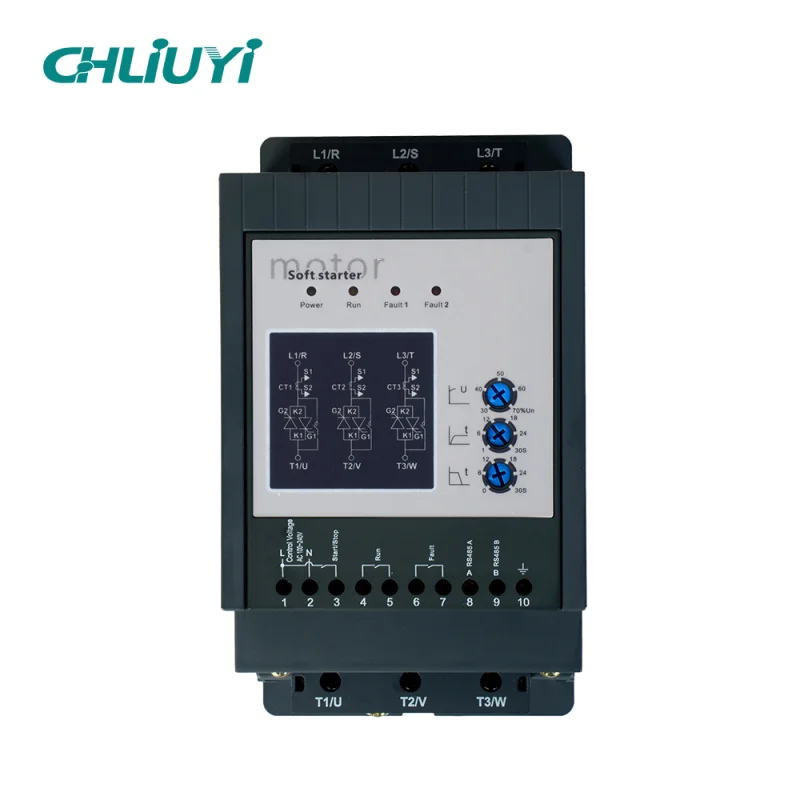
If you’re working with equipment across different regions or power systems, understanding how a frequency converter works is not optional—it directly affects performance, compatibility, and even equipment lifespan. Choosing the wrong solution (for example, using a VFD where a true frequency converter is required) can lead to overheating, unstable operation, or failed compliance in export markets.
This guide will help you clearly understand what a frequency converter is, when you actually need one (such as converting 60Hz to 50Hz), and how to select the right type based on your application.
What Is a Frequency Converter?
A frequency converter is a device that converts electrical power from one frequency to another—for example, from 60Hz to 50Hz—while maintaining a stable output suitable for the connected equipment.
This is fundamentally different from a Variable Frequency Drive (VFD). While both involve frequency manipulation, their purposes differ:
Frequency converter: Supplies power at a fixed, converted frequency (e.g., 60Hz → 50Hz)
VFD: Controls motor speed by adjusting frequency dynamically
This distinction matters in real applications. If your goal is to adapt equipment to a different power grid (e.g., exporting US-made machinery to Europe), a frequency converter is required—not just a motor control device.
How Does a Frequency Converter Work?
Most modern frequency converters—especially static frequency converters—operate through a three-stage process:
Rectification (AC → DC) Incoming AC power is converted into DC.
DC Link Filtering The DC signal is stabilized and filtered to remove fluctuations.
Inversion (DC → AC) The DC is converted back into AC at the desired output frequency (e.g., 50Hz or 60Hz).
This architecture allows precise control of output frequency and voltage. Unlike VFDs, which often vary frequency continuously for motor control, frequency converters are typically designed to deliver stable and consistent output for sensitive equipment or system compatibility.
Types of Frequency Converters
Understanding the main types helps you avoid selecting the wrong solution.
Static Frequency Converter
Uses power electronics (rectifier + inverter) with no moving parts.
Advantages: high precision, compact design, lower maintenance
Limitations: higher upfront cost than simple solutions
Rotary Frequency Converter
Uses a motor-generator set to convert frequency.
Suitable for: legacy systems or very high-power applications
Advantages: robust in harsh environments
Limitations: large size, mechanical wear, lower efficiency
Variable Frequency Drive (VFD)
Primarily used for motor speed control, not power supply conversion.
Suitable for: motor-driven systems where speed adjustment is needed
Advantages: energy savings, flexible control
Limitations: not designed for stable grid frequency conversion
Comparison Table
Type
Working Method
Advantages
Limitations
Typical Use Case
Static Frequency Converter
AC-DC-AC electronics
High precision, stable output
Higher cost
Export equipment, test systems
Rotary Converter
Motor-generator
Durable, high power
Bulky, maintenance required
Legacy industrial systems
VFD
AC-DC-AC (variable)
Motor control, energy saving
Not for fixed frequency output
Motor speed control
Frequency Converter vs VFD: What’s the Difference?
This is one of the most common sources of confusion.
Feature
Frequency Converter
VFD (Variable Frequency Drive)
Main Purpose
Convert power frequency
Control motor speed
Output Frequency
Fixed (e.g., 50Hz or 60Hz)
Variable
Typical Application
Power supply adaptation
Motor-driven systems
Can Replace Each Other?
Rarely
Only in limited cases
Key Selection Insight
If your equipment requires stable 50Hz power, you need a frequency converter.
If you want to control motor speed, a VFD is appropriate.
In some edge cases, a VFD can simulate frequency conversion, but this depends heavily on load type and system design—and is often not suitable for power supply applications.
When Do You Need a Frequency Converter (e.g. 60Hz to 50Hz)?
A frequency converter becomes necessary when your equipment and power source are not compatible.
Typical Scenarios
Exporting equipment from the US (60Hz) to Europe or Southeast Asia (50Hz)
Testing equipment under different grid conditions
Supplying stable frequency to sensitive devices
Retrofitting older equipment to new power systems
Application Scenario Table
Scenario
Problem
Recommended Solution
Export machine (US → EU)
60Hz vs 50Hz mismatch
Static frequency converter
Lab testing
Need multiple frequency inputs
Programmable converter
Industrial retrofit
Grid incompatibility
Dedicated frequency converter
In these cases, using a properly specified converter ensures equipment runs within its designed parameters.
Key Factors to Consider When Choosing a Frequency Converter
Selecting the right unit is not just about matching frequency—it requires system-level thinking.
Critical Parameters
Parameter
Why It Matters
Selection Guidance
Input Voltage/Frequency
Must match your power source
Check regional grid standards
Output Voltage/Frequency
Must match equipment requirements
Confirm nameplate specs
Power Rating
Prevent overload or inefficiency
Add safety margin (typically 20–30%)
Load Type
Affects waveform and control
Motor vs resistive load matters
Phase Type
Single-phase vs three-phase compatibility
Match both input and output
Control Features
Advanced functionality (e.g., PID)
Needed for automation systems
Practical Tip
Avoid selecting based on nominal specs alone. Always consider startup conditions, load variation, and environmental factors (temperature, duty cycle).
Common Mistakes When Selecting a Frequency Converter
1. Using a VFD Instead of a Frequency Converter
Problem: Output instability or equipment malfunction Fix: Confirm whether your application requires fixed or variable frequency
2. Ignoring Voltage Compatibility
Problem: Equipment damage or underperformance Fix: Match both voltage and frequency—not just frequency
3. Underestimating Power Requirements
Problem: Overload or system shutdown Fix: Include peak load and startup current
4. Choosing Based on Brand Alone (e.g., Siemens Frequency Converter)
Problem: Overpaying or misfit solution Fix: Focus on technical requirements first, then evaluate brand
Conclusion
Choosing the right frequency converter is less about the device itself and more about understanding your application constraints—especially frequency compatibility, load type, and system requirements.
If your goal is to adapt equipment across different power systems (such as converting 60Hz to 50Hz), a properly specified static frequency converter is usually the most reliable approach. Avoid shortcuts like using a VFD unless you fully understand the limitations.
If you’re evaluating options or need to confirm compatibility for your system, it’s worth reviewing technical specifications or discussing your requirements with a supplier before making a decision.
FAQ
What is the difference between a frequency converter and a VFD?
A frequency converter changes power frequency (e.g., 60Hz to 50Hz), while a VFD adjusts motor speed by varying frequency. They serve different purposes.
Can a VFD be used as a frequency converter?
In limited cases, yes—but only for specific loads. For stable power supply applications, a dedicated frequency converter is more reliable.
How do I convert 60Hz power to 50Hz safely?
Use a properly rated static frequency converter designed for your voltage, power, and load type. Avoid improvised solutions.
What is a static frequency converter used for?
It is commonly used in export equipment, test systems, and applications requiring stable output frequency without mechanical components.
How do I choose the right frequency converter for my equipment?
Check input/output specs, load type, and power requirements. Then evaluate features such as control methods and system integration needs.
This guide explains overvoltage and undervoltage protector settings for 230V and 400V electrical systems, including voltage limits, trip delay, reconnect delay, and practical load protection considerations.
Understanding electrical phases helps explain how power is delivered and used in different places. Put simply, an electrical phase is a way of dividing and supplying electric power. This matters most when comparing single-phase and three-phase systems, since these are the two most common methods of power distribution. This article explains how three-phase electric meters […]
Key Features & Benefits of Liuyi Circuit Breakers Our Liuyi circuit breakers are designed with your safety and convenience in mind. Here’s what makes them stand out: Feature Benefit Overload & Short Circuit Protection Prevents electrical hazards and equipment damage by automatically cutting off power during faults. Resettable Circuit Breaker Unlike fuses, you can easily […]
We use cookies to enhance your browsing experience, serve personalised ads or content, and analyse our traffic. By clicking "Accept All", you consent to our use of cookies.