A frequency converter is often selected too late in an electrical project—after the motor, control cabinet, pump, fan, or test equipment has already been specified. That can create problems: wrong phase configuration, unstable motor operation, overheating, nuisance tripping, or a system that cannot reach the required speed or frequency condition.
In an electrical system, a frequency converter is not just a box that changes hertz. It has to match the power source, the load, the voltage level, the control method, and the installation environment. This article explains how to evaluate a frequency converter for motors, industrial power systems, control cabinets, and equipment testing, with practical selection logic rather than generic definitions.
What Is a Frequency Converter in an Electrical System?
A frequency converter changes the output frequency supplied to an electrical load. In many industrial applications, this means converting or controlling the frequency delivered to a motor, machine, or test device.
For motor loads, frequency directly affects speed. A standard AC motor running at 50Hz will not behave the same way at 60Hz or 30Hz. The difference can affect speed, torque, heat, vibration, and mechanical wear.
A frequency converter may be used to:
Adjust motor speed
Match equipment to 50Hz or 60Hz power conditions
Control pumps, fans, conveyors, or rotating machinery
Provide a specific output frequency for testing
Support electrical cabinet or automation system integration
It is important not to treat frequency conversion as simple voltage conversion. Voltage, frequency, phase, current, and load type must be checked together. A device that changes voltage but does not provide the required frequency control may not solve the actual electrical problem.
Frequency Converter vs VFD vs Power Inverter
The terms frequency converter, VFD, and power inverter are sometimes used together in industrial sourcing, but they do not always mean the same thing.
Term
Main Purpose
Typical Application
What to Check Before Buying
Frequency Converter
Changes or controls output frequency
Motor control, 50Hz/60Hz adaptation, test power
Input/output frequency, voltage, phase, load type
VFD
Controls motor speed by varying frequency
Pumps, fans, conveyors, industrial motors
Motor power, torque demand, control mode, overload capacity
Power Inverter
Converts electrical power form, often DC to AC or AC output conversion
Backup power, inverter power supply, special power systems
A VFD is often a type of frequency converter when used for motor speed control. However, not every frequency converter is selected only for speed control. Some buyers need frequency adaptation for imported or exported equipment, while others need controlled output for testing or electrical system matching.
The safest selection method is to start from the application, not the product name. Ask what the system needs to accomplish: speed regulation, frequency adaptation, load testing, energy control, or replacement of an existing drive.
Why Frequency Matters in Motor and Power Applications
Frequency affects how electrical equipment behaves under real operating conditions. In motor applications, changing the frequency changes the magnetic field rotation speed, which changes motor speed.
For example, if a motor designed for 50Hz operation is supplied at 60Hz without proper evaluation, it may run faster than expected. That can affect pumps, fans, gearboxes, and mechanical transmission systems. In the opposite case, operating at a lower frequency may reduce speed but also change cooling and torque behavior.
Incorrect frequency selection can lead to:
Motor overheating
Excessive vibration
Reduced torque at low speed
Unexpected pump or fan output
Poor process control
Frequent protection trips
Shorter service life of connected equipment
Frequency also matters in export equipment testing. A manufacturer may need to verify whether a machine designed for a 60Hz market can operate correctly before shipment. In that case, the frequency converter is part of the test condition, not just a motor control accessory.
Single-Phase vs Three-Phase Frequency Converter: How to Decide
One of the first selection questions is whether the system requires a single-phase or three-phase frequency converter. This decision should be based on both the available power source and the load being driven.
Selection Factor
Single-Phase Frequency Converter
Three-Phase Frequency Converter
Typical Power Source
Single-phase supply, often in smaller facilities or test setups
Three-phase industrial power supply
Typical Load
Light-duty motors, small machines, test equipment
Industrial motors, pumps, fans, production equipment
Best Fit
When site power is limited or the load is relatively small
When load stability and continuous operation matter
Main Selection Risk
Undersizing the unit or expecting it to handle heavy loads
Ignoring phase, voltage, overload, or protection requirements
Key Check
Input voltage, output requirement, power margin
Motor rating, phase matching, control mode, protection functions
A single-phase solution may make sense when the available supply is limited and the load is not demanding. This can apply to small equipment, light-duty motor control, or certain test environments.
A three-phase solution is normally the better fit for industrial motors, pump systems, fan systems, and control cabinet applications. These loads often require more stable output, better overload handling, and proper protection coordination.
When comparing options, do not choose only by rated power. A motor with frequent starts, high inertia, or demanding torque may require more margin than its nameplate power suggests. For projects involving three-phase motor control or 380V industrial electrical systems, reviewing a three-phase frequency converter can help confirm voltage, control mode, and load compatibility before final selection.
Key Specifications to Check Before Choosing a Frequency Converter
A frequency converter should be selected from the electrical system outward. Start with the power source and load, then check the converter specifications.
Specification
Why It Matters
What to Check
Input Voltage
Determines whether the unit can connect to the available supply
Single-phase or three-phase, 220V or 380V range
Output Voltage
Must match the connected equipment or motor requirement
Rated output voltage and allowable tolerance
Output Frequency Range
Determines speed control or test frequency capability
Required Hz range, such as 50Hz, 60Hz, or variable output
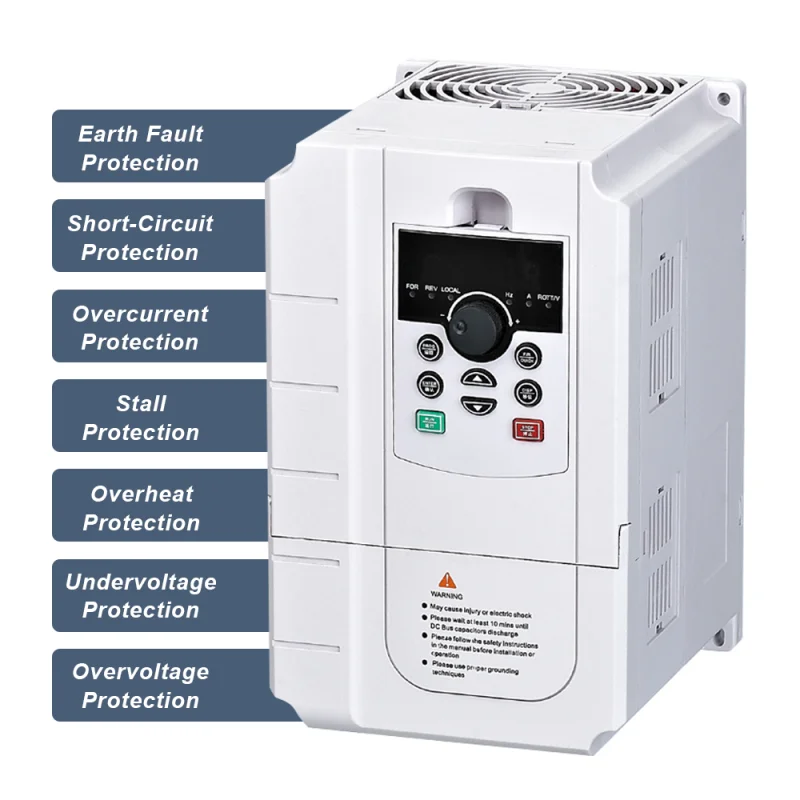
Overcurrent, overvoltage, undervoltage, overheating, short circuit
Cooling and Installation
Affects long-term operation in cabinets or enclosed spaces
Ventilation, ambient temperature, dust, panel space
The rated power is only one part of selection. A pump, fan, conveyor, and test power setup may have very different load behavior even if the power rating looks similar.
For example, a fan may have a variable torque profile, while a conveyor may need stronger starting torque. A test power system may care more about frequency accuracy and output stability than speed response. These differences should influence converter selection.
Common Electrical Applications for Frequency Converters
Motor Speed Control in Industrial Machinery
A frequency converter can control the speed of AC motors in machinery where fixed-speed operation is not ideal. This may include conveyors, processing equipment, mixers, and rotating mechanical systems.
The key question is not simply whether the motor can run. The better question is whether the converter can support the required speed range, startup behavior, and torque profile without causing overheating or unstable operation.
Pump and Fan Control
Pumps and fans are common frequency converter applications because flow and air volume often do not need to remain at full output all the time.
In these systems, the selection focus should include motor power, control method, response time, and whether PID control is needed. For example, a pump system that maintains pressure may require different control settings than a fan system that adjusts airflow.
Control Cabinet and Panel Integration
Panel manufacturers and system integrators often install frequency converters inside electrical cabinets. In this case, the converter must fit not only the motor but also the cabinet environment.
Important checks include wiring access, heat dissipation, protection coordination, grounding, electromagnetic interference considerations, and available panel space. A converter that works in open air may require derating or ventilation planning inside a crowded cabinet.
Equipment Testing for 50Hz and 60Hz Conditions
Manufacturers that export equipment may need to test machines under different frequency conditions. A frequency converter can help create the required output condition for verification.
In this case, the selection focus may shift from speed control to frequency accuracy, voltage stability, and the ability to support the test load safely.
Replacement and Retrofit Projects
When replacing an existing converter, VFD, or inverter power supply, do not match only the power rating or appearance. Review the original input voltage, output voltage, frequency range, wiring method, control terminals, and protection settings.
Retrofit projects often fail because the replacement unit is electrically close but functionally different.
Common Mistakes When Selecting a Frequency Converter
Common Mistake
Possible Result
Better Approach
Choosing only by kW rating
Overheating, trips, weak startup
Check load type, startup current, and duty cycle
Ignoring phase configuration
Motor cannot run correctly or safely
Confirm input phase and output phase requirements
Treating it as a voltage converter
Frequency problem remains unsolved
Check both voltage and frequency requirements
Undersizing for motor loads
Nuisance tripping or unstable operation
Add margin based on load behavior
Ignoring cabinet temperature
Reduced life or thermal shutdown
Check ventilation and installation space
Skipping control requirements
Poor integration with automation system
Confirm PID, external signal, or manual control needs
The most common issue is selecting a frequency converter from a catalog without understanding the load. A motor-driven pump, a fan, and a test power application may all require a converter, but they do not require the same selection priorities.
How to Choose the Right Frequency Converter for Your Electrical System
Use a practical selection sequence before choosing a model.
1. Confirm the Power Source
Start with the available input power. Check whether the supply is single-phase or three-phase, and confirm the voltage level. Also confirm whether the supply condition is stable enough for the connected equipment.
2. Identify the Load Type
Next, define what the converter will drive. Is it a motor, pump, fan, conveyor, compressor, test device, or electrical cabinet load?
A motor load usually requires attention to torque, startup behavior, and overload capacity. A test load may require more attention to output frequency and voltage stability.
3. Define the Control Objective
Decide what the frequency converter must actually do:
Change motor speed
Convert 50Hz to 60Hz
Support variable flow or pressure control
Replace an existing drive
Provide test power for equipment validation
Integrate with an automation or control cabinet system
This step prevents the common mistake of buying a device with the right name but the wrong function.
4. Check Power Margin and Overload Demand
Do not select only based on the normal running current. Motors may require higher current during startup or acceleration. Some loads also run continuously near full capacity, which can stress an undersized converter.
Check rated current, overload capacity, cooling conditions, and duty cycle before final selection.
5. Review Installation and Protection Requirements
A frequency converter installed in a clean, ventilated test bench faces different conditions from one installed inside a hot industrial cabinet.
Before final selection, review:
Ambient temperature
Cabinet ventilation
Dust or moisture exposure
Cable length
Grounding
Protection coordination
Control wiring
Maintenance access
If you are not sure whether your electrical system needs a single-phase or three-phase converter, confirm the input power, load type, rated power, and required frequency range first. A technical supplier can review these details before you request a quotation or choose a model.
Final Thoughts on Frequency Converter Selection
Choosing a frequency converter should start with the electrical system, not with the product name alone. Before selecting a model, you need to confirm the input power, output voltage, frequency range, phase configuration, load type, and control objective.
For motor-driven equipment, the main concerns are speed range, torque demand, overload capacity, and protection. For 50Hz/60Hz testing or equipment adaptation, output frequency accuracy and voltage compatibility become more important. For control cabinet integration, cooling, wiring space, grounding, and long-term operating conditions should also be checked.
A well-matched frequency converter helps the system run within the correct electrical conditions. A poorly matched one can cause unstable operation, overheating, nuisance trips, or premature equipment failure. If the application requirements are not fully clear, the safest next step is to review the load and power parameters with a technical supplier before choosing a final model.
FAQ
Is a frequency converter the same as a VFD?
A VFD is commonly used as a frequency converter for motor speed control. However, a frequency converter may also be used for frequency adaptation, test power, or electrical system matching. The application determines which term is more accurate.
Can a frequency converter convert 50Hz to 60Hz?
Yes, some frequency converters can provide 50Hz to 60Hz conversion when designed for that purpose. You still need to confirm voltage, power rating, phase configuration, and load compatibility before using it for equipment testing or operation.
Can I use a single-phase frequency converter for a three-phase motor?
In some cases, a converter can accept single-phase input and provide output for a three-phase motor, but the power range and load type must be checked carefully. Heavy-duty or continuous industrial loads usually need more margin and proper three-phase output matching.
How do I choose the right frequency converter for a motor?
Start with the motor voltage, phase, rated power, rated current, and required speed range. Then check startup demand, torque behavior, overload capacity, and whether the system needs manual control, PID control, or external signal control.
What happens if a frequency converter is undersized?
An undersized frequency converter may trip, overheat, fail to start the load, or run unstably under acceleration. In motor applications, undersizing can also reduce equipment life because the converter operates too close to its limits.
Does a frequency converter also change voltage?
Some frequency converters can manage both voltage and frequency output, but not all products are designed for the same purpose. Always check input voltage, output voltage, output frequency range, and whether the product is intended for motor control, power adaptation, or testing.
Key Features & Benefits of Liuyi Circuit Breakers Our Liuyi circuit breakers are designed with your safety and convenience in mind. Here’s what makes them stand out: Feature Benefit Overload & Short Circuit Protection Prevents electrical hazards and equipment damage by automatically cutting off power during faults. Resettable Circuit Breaker Unlike fuses, you can easily […]
Have you ever wondered how large buildings, factories, and commercial facilities keep track of their massive energy consumption? Here’s the thing: traditional meters just can’t handle the job anymore. That’s where a three phase smart meter comes into play, transforming the way businesses monitor and manage their electrical usage. If you’re running a commercial operation or managing […]
If you want to take control of your energy consumption and ensure accurate billing, learning how to read energy meter devices is essential. Whether you are a homeowner, a business operator, or simply curious about your electricity usage, understanding how to read energy meter readings can help you save money, detect unusual patterns, and make […]
We use cookies to enhance your browsing experience, serve personalised ads or content, and analyse our traffic. By clicking "Accept All", you consent to our use of cookies.