Blog
What is Overvoltage Protection
Discover comprehensive overvoltage protection techniques to safeguard your electrical systems. Learn how to prevent damage from lightning, switching, and other surges—keep your power system safe today!
Read More
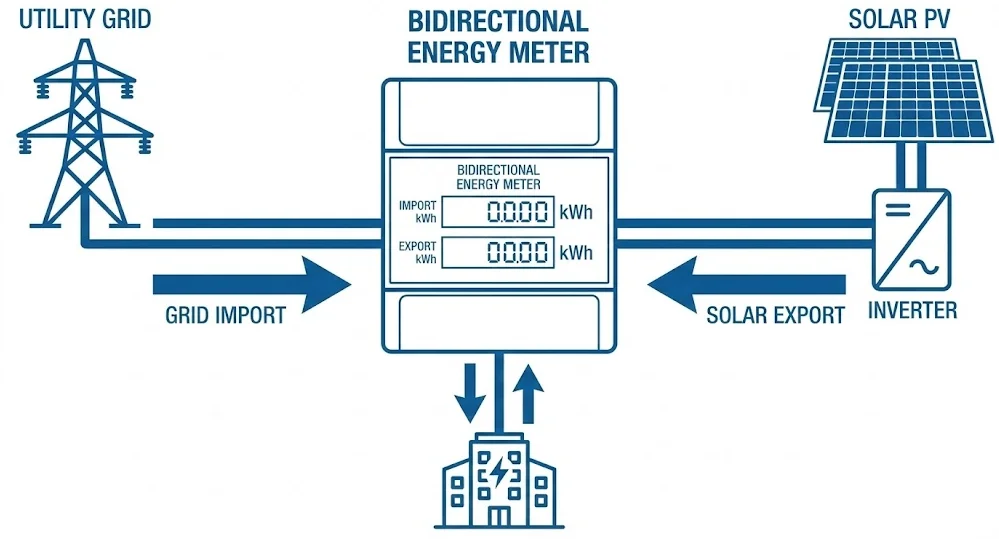
Bidirectional energy metering represents a critical advancement in solar photovoltaic infrastructure, enabling precise measurement of both grid consumption and solar energy export. As industrial facilities and commercial properties increasingly adopt renewable energy solutions, understanding bidirectional energy metering becomes essential for optimizing energy costs and ensuring regulatory compliance. This technology transforms conventional one-way electricity monitoring into a sophisticated two-directional system that accurately tracks power flow in both directions, providing facility managers with comprehensive visibility into their energy economics.
Bidirectional energy metering is an advanced measurement system designed to record electricity flow in two directions: energy consumed from the utility grid and excess power exported back to the grid from on-site generation sources. Unlike traditional unidirectional meters that only measure incoming electricity, bidirectional energy metering equipment features dual-register functionality that simultaneously tracks import and export transactions.
Modern bidirectional meters integrate sophisticated measurement circuitry capable of distinguishing between forward and reverse power flow. These devices utilize current transformers (CTs) and voltage sensors positioned to detect directional energy movement. The measurement architecture includes separate accumulators for import and export energy, enabling independent tracking of each transaction type. High-accuracy analog-to-digital converters process the voltage and current signals, while embedded microprocessors calculate real-time power metrics including active energy (kWh), reactive energy (kVARh), and apparent energy (kVAh) in both directions.
For industrial applications, three-phase bidirectional meters provide balanced measurement across all phases, ensuring accurate data collection in high-power installations. These meters typically feature RS485 communication interfaces or wireless connectivity options, allowing integration with energy management systems (EMS) and supervisory control and data acquisition (SCADA) platforms.
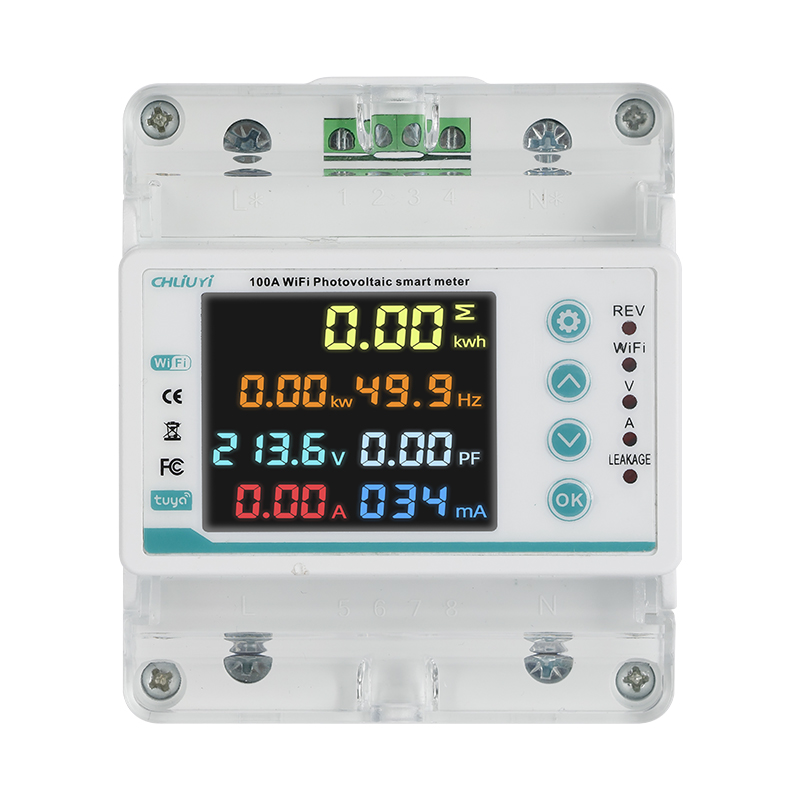
Bidirectional energy meters operate in four-quadrant measurement mode, capturing all combinations of active and reactive power flow. Quadrant I measures import active power with inductive reactive power, Quadrant II tracks export active power with inductive reactive power, Quadrant III records export active power with capacitive reactive power, and Quadrant IV monitors import active power with capacitive reactive power. This comprehensive measurement capability ensures accurate billing under various operational conditions, including periods when solar inverters inject reactive power for voltage support.
The operational principle of bidirectional energy metering in photovoltaic installations centers on dynamic power flow detection. During peak solar production hours when generation exceeds on-site consumption, the meter detects reverse current flow and increments the export register. Conversely, during periods of insufficient solar output or nighttime operations, the meter measures forward current from the grid and updates the import register.
Solar PV systems with single-phase smart meters continuously monitor instantaneous power conditions. When solar panel output surpasses facility load demand, the surplus electricity flows through the interconnection point toward the utility distribution system. The bidirectional meter’s current sensors detect this reverse flow based on phase relationship between voltage and current waveforms. The 180-degree phase shift between import and export conditions allows the meter’s digital signal processor to accurately classify each transaction.
Modern meters sample voltage and current waveforms at frequencies exceeding 3 kHz, providing sufficient temporal resolution to capture rapid fluctuations in solar output caused by passing clouds or variable load conditions. This high-speed sampling ensures accurate energy accounting even during transitional periods when power flow direction changes multiple times per minute.
Professional-grade bidirectional meters feature comprehensive data logging capabilities, storing interval data at 15-minute or hourly resolution for billing verification and energy analysis. Communication protocols such as Modbus RTU, Modbus TCP, and DNP3 enable seamless integration with building management systems. For distributed installations, wireless-enabled meters with WiFi connectivity transmit real-time data to cloud-based analytics platforms, facilitating remote monitoring and automated anomaly detection.
Implementing bidirectional energy metering in solar PV installations delivers multiple strategic advantages for industrial and commercial facility operators. These benefits extend beyond basic energy accounting to encompass financial optimization, operational visibility, and regulatory compliance.
Bidirectional energy metering forms the technical foundation for net metering programs, which credit facility operators for excess solar generation exported to the grid. Accurate measurement of exported energy directly impacts financial returns from solar investments. Studies indicate that measurement accuracy differences of just 1% can affect annual returns by several thousand dollars for mid-sized commercial installations. Professional meters meeting IEC 62053-21 Class 1 or ANSI C12.20 Class 0.2 standards ensure measurement uncertainty remains below 0.5%, protecting revenue streams from systematic errors.
The granular data provided by bidirectional meters enables sophisticated energy procurement strategies. Facility managers can analyze historical import/export patterns to optimize power purchase agreements, negotiate favorable demand response rates, and identify opportunities for load shifting to maximize solar self-consumption during expensive on-peak periods.
Bidirectional energy metering provides unprecedented visibility into facility energy dynamics. Real-time monitoring reveals the relationship between solar production, building load, and grid interaction throughout daily and seasonal cycles. This transparency enables proactive identification of system underperformance, such as reduced solar output indicating soiled panels or inverter faults requiring maintenance.
Advanced meters with power quality monitoring capabilities simultaneously track voltage harmonics, power factor, and voltage sags, providing comprehensive diagnostic information. For facilities with three-phase measurement requirements, phase-by-phase monitoring reveals load imbalances that reduce system efficiency and increase neutral conductor losses.
Selecting appropriate bidirectional energy metering equipment requires careful evaluation of technical specifications aligned with installation requirements and regulatory standards. Key parameters include measurement range, accuracy class, communication capabilities, and environmental ratings.
Meter selection begins with determining the maximum current capacity required for the installation. Residential and small commercial systems typically utilize meters rated for 60-100A, while larger commercial and industrial installations require 200A or higher capacity. For systems with variable load profiles, consider meters with extended measurement range specifications, such as 10-100A or 5-80A, providing accurate readings across wide operating conditions without requiring multiple CT ratios.
Direct-connection meters integrate current measurement circuits within the meter housing, suitable for installations up to 100A. Higher-capacity systems employ external current transformers with standardized 5A or 1A secondary outputs, allowing flexible sizing. When specifying CT-operated meters, ensure the CT ratio matches both the expected maximum current and the meter’s input rating. Common CT ratios include 200:5, 400:5, 800:5, and 1000:5 for industrial applications.
Bidirectional meters for commercial transactions must comply with applicable metrology standards. In international markets, IEC 62053-21 defines accuracy requirements for AC static meters, with Class 1 meters providing 1% accuracy and Class 0.5S meters offering 0.5% accuracy at unity power factor. North American installations typically require ANSI C12.20 compliance, with Class 0.2 representing the highest accuracy tier for revenue metering.
For solar applications involving net metering billing, utilities typically mandate meters meeting or exceeding Class 1 (IEC) or Class 0.5 (ANSI) accuracy standards. Verify that meter certifications cover bidirectional measurement, as some devices rated for accurate import measurement may exhibit degraded performance during export conditions. MID (Measuring Instruments Directive) approval indicates compliance with European Union metrology requirements, essential for installations in EU member states.
Modern energy management requires meters with robust communication capabilities. RS485 serial interfaces using Modbus RTU protocol provide cost-effective wired connectivity for local monitoring systems. For distributed installations or buildings with existing Ethernet infrastructure, meters with Modbus TCP or BACnet IP interfaces enable direct integration with building automation networks without protocol converters.
Wireless-enabled meters with WiFi, cellular, or LoRaWAN connectivity eliminate wiring costs and enable flexible placement. However, evaluate wireless reliability in industrial environments with potential RF interference. For critical revenue metering applications, consider meters with dual communication interfaces providing redundant data paths.
Net metering programs represent the primary regulatory framework enabling economic viability of grid-connected solar PV systems. These utility programs credit facility operators for excess generation exported to the distribution grid, effectively using the utility network as virtual energy storage. Bidirectional energy metering provides the measurement infrastructure that enables fair and accurate net metering transactions.
Net metering policies vary significantly across jurisdictions, affecting meter requirements and billing calculations. True net metering programs provide one-to-one credit for exported energy, allowing export kWh to directly offset import kWh at retail electricity rates. Under this structure, facilities with balanced annual generation and consumption can reduce their grid electricity purchases to zero, paying only monthly service charges.
Alternative compensation structures include net billing systems that credit exports at rates lower than retail electricity prices, typically at wholesale or avoided-cost rates. Time-of-use (TOU) net metering programs apply different credit rates based on export timing, incentivizing generation during high-demand periods. Bidirectional meters must support the interval data collection required for these sophisticated billing structures, recording import and export transactions with timestamps enabling TOU calculations.
Interconnecting solar PV systems to utility distribution networks requires compliance with technical standards and utility-specific requirements. IEEE 1547 defines interconnection criteria including voltage regulation, frequency response, and anti-islanding protection. From a metering perspective, utilities typically specify approved meter models, installation standards, and communication requirements.
Many jurisdictions mandate separate production metering in addition to bidirectional net meters, requiring dual metering configurations that independently measure solar output and net facility consumption. This configuration provides utilities with complete visibility into both generation and consumption patterns, supporting distribution planning and renewable energy tracking. When designing metering systems, verify utility requirements regarding meter ownership—some utilities provide and maintain the bidirectional net meter, while others allow customer-owned metering with periodic utility verification.
Bidirectional meters used for utility billing incorporate security features preventing unauthorized manipulation. Physical security measures include tamper-evident seals on terminal covers and optional lockable enclosures. Electronic tamper detection monitors for abnormal conditions including cover removal, magnetic field interference, reverse phase connection, and current bypass attempts. Advanced meters log tamper events with timestamps, enabling utilities to identify and investigate potential meter fraud.
For facilities concerned about cybersecurity, evaluate meter authentication capabilities and encrypted communication options. Meters with TLS encryption for IP communications and device certificate authentication prevent unauthorized access to metering data and protect against remote manipulation.
Acquiring bidirectional energy metering equipment for solar PV installations requires systematic evaluation of technical requirements, supplier capabilities, and total cost of ownership. The following procurement checklist ensures comprehensive vendor assessment and informed purchasing decisions.
| Specification Category | Key Parameters | Evaluation Criteria |
|---|---|---|
| Current Rating | Maximum load current, CT ratio if applicable | 20-30% margin above peak load |
| Accuracy Class | IEC or ANSI accuracy rating | Class 1 minimum for net metering |
| Voltage Range | Operating voltage limits | Match utility voltage ±10% |
| Communication | Supported protocols and interfaces | Compatibility with existing systems |
| Environmental Rating | Operating temperature, humidity, IP rating | Match installation environment conditions |
| Certifications | Utility approval, regional standards compliance | Verify utility approved meter list |
When sourcing bidirectional meters from manufacturers, prioritize suppliers with demonstrated expertise in solar metering applications and comprehensive technical support capabilities. Established manufacturers typically provide detailed technical documentation, application engineering assistance, and factory calibration certificates traceable to national metrology standards.
Evaluate supplier quality management systems, including ISO 9001 certification and production testing procedures. Request information on incoming component inspection, in-process testing protocols, and final verification testing. Reputable manufacturers perform 100% functional testing of finished meters, including accuracy verification at multiple load points and power factors in both import and export modes.
Consider supplier stability and long-term product availability, particularly for large installations requiring consistent meter specifications across multiple phases. Inquire about typical product lifecycle durations, availability of spare parts, and migration paths for obsolete models. For critical applications, evaluate suppliers’ warranty terms, typical mean time between failures (MTBF), and field failure rates.
While initial meter purchase price constitutes a significant procurement consideration, comprehensive evaluation requires total cost of ownership (TCO) analysis encompassing installation labor, communication infrastructure, ongoing maintenance, and potential measurement errors. Higher-accuracy meters with superior long-term stability may justify premium pricing through reduced revenue losses from measurement uncertainty.
Installation costs vary significantly based on meter design. DIN-rail mounted meters for panel installations minimize labor compared to socket-mounted designs requiring specialized sockets. Meters with tool-free terminals and intuitive configuration interfaces reduce commissioning time. For projects involving multiple meter installations, standardizing on a single meter platform reduces spare parts inventory and technician training requirements.
Communication infrastructure represents another significant TCO component. Wireless meters eliminate conduit and cabling costs but may require cellular data plans or WiFi network extensions. Evaluate five-year communication costs when comparing wired and wireless options. For facilities with existing building automation networks, meters with native protocol support avoid ongoing costs associated with protocol gateways.
Sourcing bidirectional energy meters from established manufacturers with proven expertise in industrial metering applications provides multiple strategic advantages. Professional manufacturers invest extensively in research and development, ensuring products incorporate the latest measurement technology and comply with evolving regulatory requirements.
Manufacturing quality directly impacts measurement accuracy and long-term reliability. Leading meter manufacturers employ precision calibration equipment traceable to national metrology institutes, ensuring factory calibration meets specified accuracy over the entire measurement range and environmental operating conditions. Comprehensive type testing verifies performance under electrical transients, temperature extremes, and mechanical stress conditions encountered in real-world installations.
Technical support capabilities distinguish professional manufacturers from commodity suppliers. Application engineering assistance helps specify appropriate meter configurations for complex installations involving multiple generation sources, energy storage, or specialized load types. Commissioning support and training resources accelerate project implementation and ensure proper meter operation.
Product documentation quality reflects manufacturer professionalism and commitment to customer success. Comprehensive user manuals, installation guides, and communication protocol documentation enable system integrators to efficiently implement and commission metering systems. Regularly updated firmware and cybersecurity patches demonstrate ongoing product support and protection against emerging security threats.
What is the difference between a standard energy meter and a bidirectional meter for solar PV systems?
Standard energy meters measure only electricity consumption from the grid in one direction. Bidirectional meters track energy flow in both directions—measuring both electricity imported from the utility grid and surplus solar energy exported back to the grid. This dual-direction capability is essential for net metering programs that credit solar system owners for excess generation. Bidirectional meters feature separate registers or accumulators for import and export transactions, providing the granular data required for accurate billing under renewable energy programs.
How accurate do bidirectional meters need to be for utility billing purposes?
For revenue metering and net metering applications, bidirectional meters typically must meet IEC 62053-21 Class 1 accuracy standards (1% accuracy) or ANSI C12.20 Class 0.5 standards (0.5% accuracy). These accuracy specifications ensure measurement uncertainty remains sufficiently low to protect both utility revenue and customer credits. Higher accuracy Class 0.5S or Class 0.2 meters provide enhanced precision particularly valuable for large commercial installations where even small measurement errors can impact annual financial returns by thousands of dollars. Utilities maintain approved meter lists specifying minimum accuracy requirements for interconnected solar systems.
Can bidirectional meters be retrofitted to existing solar PV installations?
Yes, bidirectional meters can typically be retrofitted to existing solar PV systems, though the specific process depends on current metering configuration and utility requirements. Many utilities replace existing unidirectional meters with bidirectional models when customers add solar generation capacity. For systems with customer-owned metering, upgrading involves selecting a bidirectional meter compatible with existing current transformers and communication infrastructure. Retrofitting requires coordination with utility interconnection procedures and may necessitate updated net metering agreements. Working with experienced electrical contractors familiar with utility requirements ensures compliant installations and minimizes interconnection delays.
What communication protocols are most common in bidirectional energy meters?
Modern bidirectional energy meters typically support Modbus RTU over RS485 serial interfaces and Modbus TCP over Ethernet connections. These protocols enable integration with energy management systems, building automation platforms, and SCADA networks. Advanced meters increasingly offer wireless connectivity including WiFi, cellular (4G/LTE), and LoRaWAN for remote monitoring applications. For utility automatic meter reading (AMR) systems, meters may support specialized protocols such as DNP3 or IEC 61850. When specifying meters, verify protocol compatibility with existing monitoring infrastructure and consider future integration requirements with cloud-based energy analytics platforms.
What is the typical lifespan and warranty period for bidirectional solar meters?
Professional-grade bidirectional energy meters designed for commercial and industrial applications typically have operational lifespans of 10-15 years or longer with minimal maintenance requirements. Electronic components, particularly electrolytic capacitors, represent the primary life-limiting factors in solid-state meters. Manufacturers typically provide 2-5 year warranties covering defects in materials and workmanship. For critical revenue metering applications, utilities may require periodic recalibration or replacement at intervals such as 10 years to ensure ongoing measurement accuracy. Meters installed in harsh environmental conditions or experiencing frequent electrical transients may require more frequent inspection and potential early replacement.
Discover comprehensive overvoltage protection techniques to safeguard your electrical systems. Learn how to prevent damage from lightning, switching, and other surges—keep your power system safe today!
Read More
Discover the benefits and functions of a Three Phase Meter for efficient energy management in industrial and commercial power systems.
Read More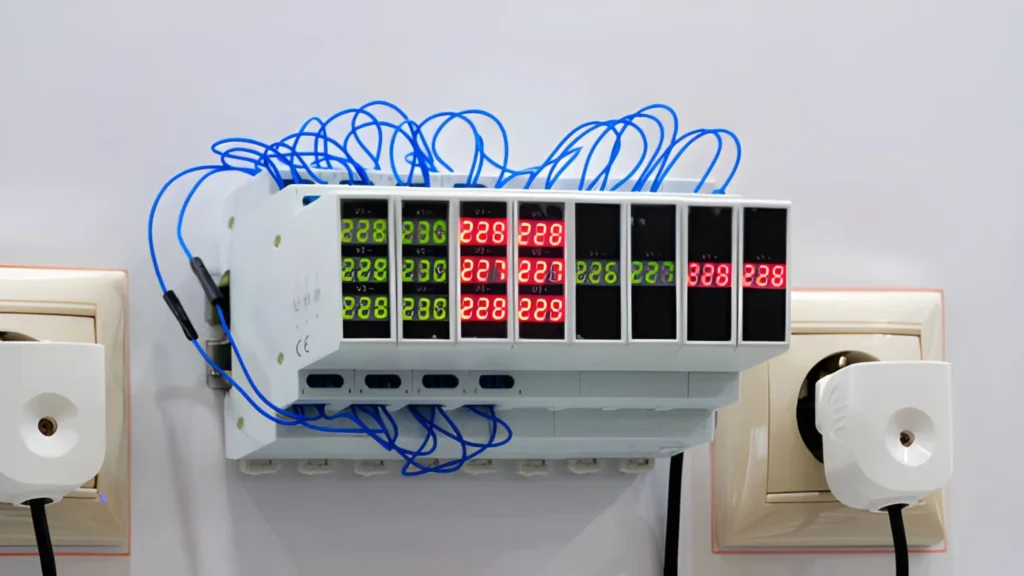
Defining the DIN Rail Power Meter A DIN rail power meter is an electronic device designed to measure electrical energy consumption and power parameters, specifically built to mount on a standard 35mm DIN rail inside electrical distribution boards or panels. This mounting system is widely recognized in industrial and commercial electrical setups, providing a secure […]
Read More