Ever looked at your electricity bill and wondered, “What exactly am I paying for?”
An accurate electricity energy meter is the quiet little device that answers that question, line by line, kilowatt-hour by kilowatt-hour.
In this guide, we will walk through what it is, how it works, and how you can choose the right model for your home, factory, or commercial building—all in clear, simple language.
What Is An Electricity Energy Meter?
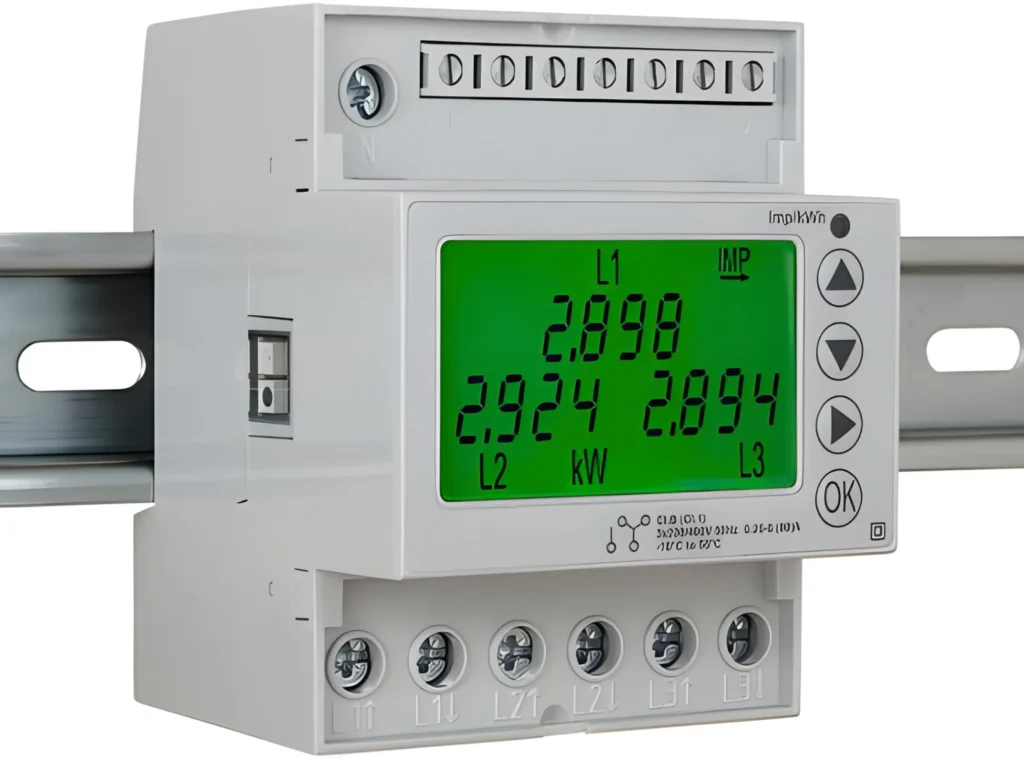
An electricity energy meter(often just called a power meter or kWh meter) is a device that measures how much electrical energy you use over time. It records consumption in kilowatt‑hours and helps utilities bill you correctly, and it helps you track and control your own usage.
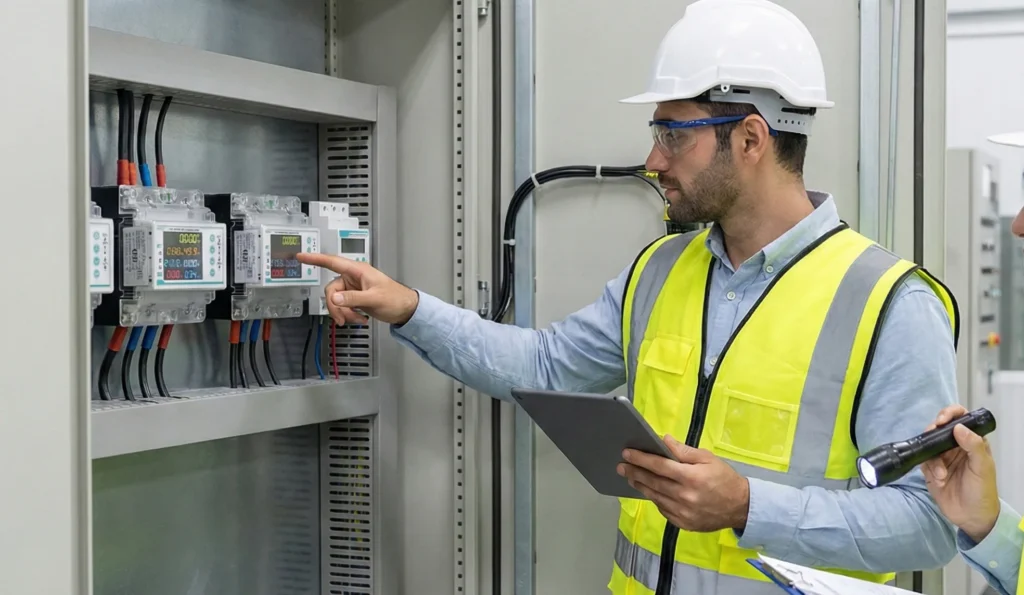
There are three main levels where electricity energy meters are used: at the utility level for billing, at the building level for main incoming power, and at the equipment level for more detailed monitoring and energy management. In industrial and commercial projects, meters are often installed on individual feeders, machines, or panels to track loads, detect waste, and plan maintenance.
Meter level
Typical use case
Who cares most?
Utility/billing
Whole property billing
Utility, building owner
Main distribution
Incoming supply, sub‑mains
Facility manager
Equipment/sub‑load
Machine, line, or tenant metering
OEMs, tenants, engineers
Main Types Of Electricity Energy Meter
When you search for “electricity energy meter,” you will find many product types: analog meters, digital kWh meters, smart energy meters, three phase meters, and prepaid meters. Each has its own strengths.
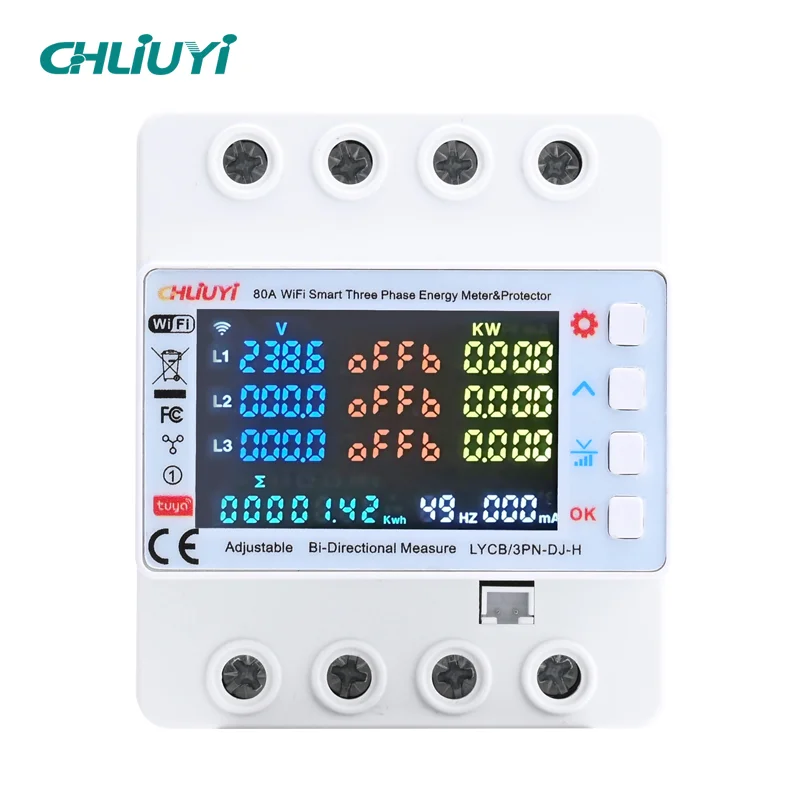
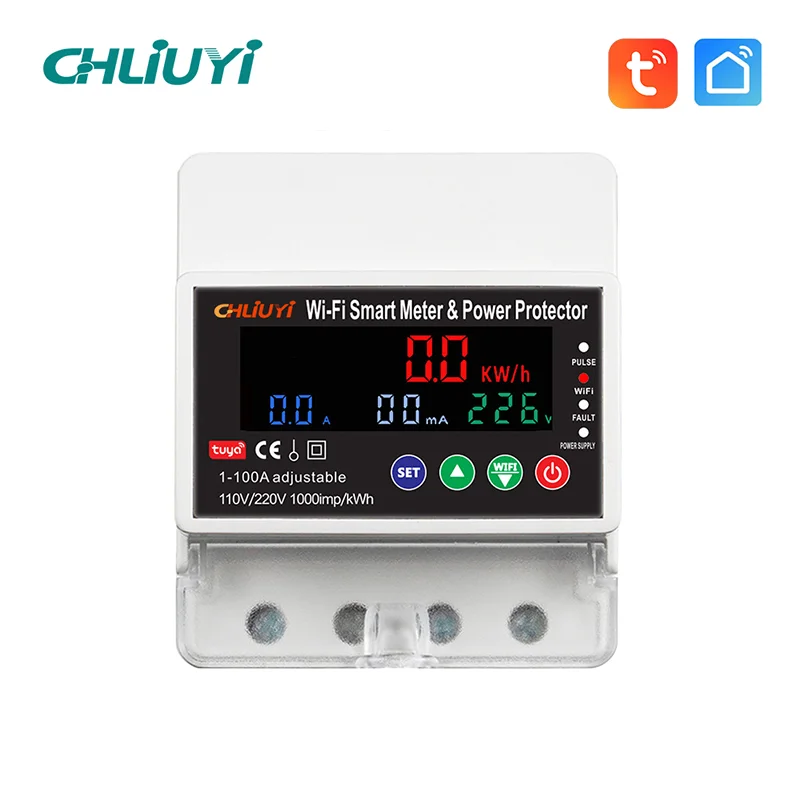
Traditional electromechanical meters use a spinning disc to measure energy; they are simple but not very flexible. Modern digital meters show energy and power on an LCD display, often with pulse outputs or communication interfaces. Smart meters go further: they add remote reading, data logging, alarm functions, and advanced tariffs, which are popular in “smart home energy monitoring” and “industrial energy management systems.”
Type
Key features
Typical applications
Electromechanical meter
Spinning disc, basic kWh reading
Legacy residential
Digital kWh meter
LCD, more accurate, often compact
Residential & small business
Smart electricity meter
Remote reading, data logging, alarms
Smart grid, smart building
Three phase energy meter
Measures three‑phase loads and imbalance
Industry, commercial buildings
Prepaid energy meter
Pay‑as‑you‑go credit system
Apartments, rental properties
Single Phase vs Three Phase Electricity Energy Meter
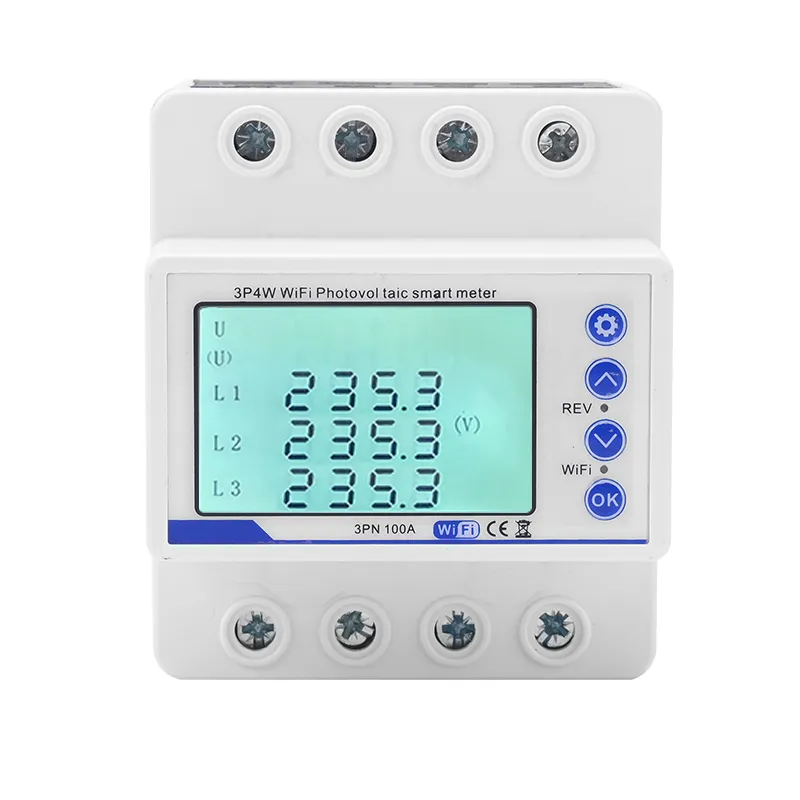
One of the first choices you face is simple: single phase or three phase. Single phase electricity energy meters are usually used in homes and small offices with modest loads. Three phase electricity energy meters are used when you have heavy machinery, motors, or large HVAC equipment.
If your system is 230 V single phase and your maximum current is modest, a single phase digital energy meter is typically enough. For 380/400/415 V three phase systems, especially in factories and commercial buildings, a three phase energy meter provides more complete information, such as per‑phase voltage, current, power factor, and total harmonic distortion in advanced models.
Feature
Single phase meter
Three phase meter
Supply type
1‑phase, 2‑wire
3‑phase, 3‑ or 4‑wire
Typical loads
Lighting, sockets, small appliances
Motors, compressors, pumps, production lines
Measurement detail
Total kWh, sometimes current & voltage
Per‑phase V/I, kW, kvar, PF, totals and sometimes THD
Ideal for
Homes, small shops
Factories, malls, data centers, panel builders
Key Specifications To Check Before You Buy
Choosing an electricity energy meter without reading the spec sheet is like buying shoes without checking the size. You might get lucky—but usually you do not. So what should you look at?
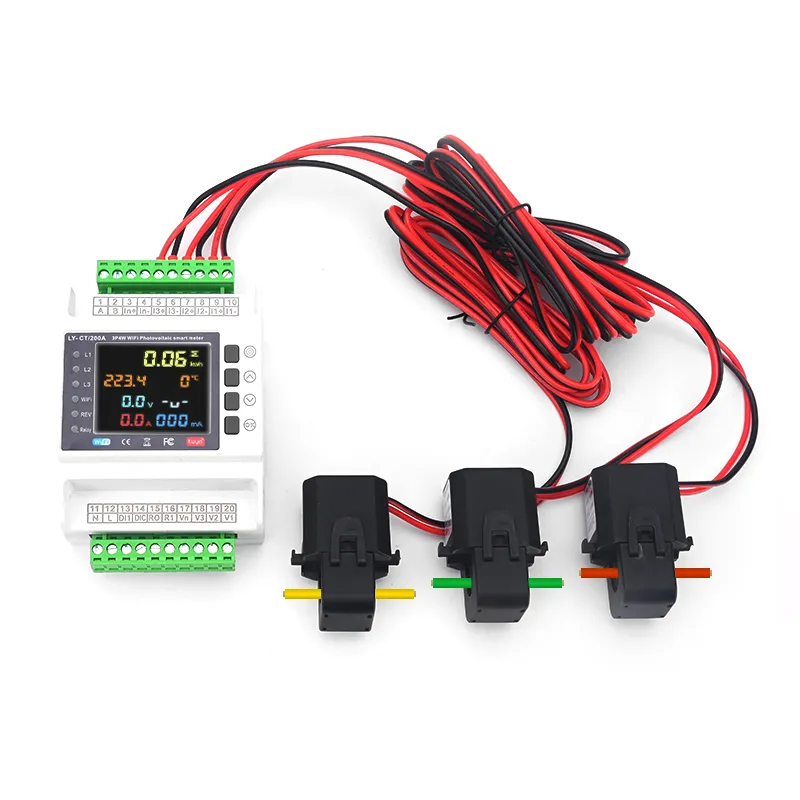
Voltage and current rating Make sure the meter matches your nominal voltage and supply system (for example, 230 V single phase, or 3×230/400 V three phase). Also check the current rating: many direct‑connected meters handle 5–80 A or 10–100 A. For larger currents you will need CT operated or CT/PT operated meters.
Accuracy class For serious energy management, look for Class 1.0 or better (Class 0.5, Class 0.2s for high‑precision or billing‑grade meters). Higher accuracy matters when energy costs are high or when you allocate costs between tenants or production lines.
Frequency and wiring Most meters are 50/60 Hz compatible, but always confirm. Also check wiring type: 1‑phase 2‑wire, 3‑phase 3‑wire, or 3‑phase 4‑wire.
Display and measured parameters Some meters only show kWh; others show kW, kvar, kVA, power factor, voltage, current, maximum demand, and more. Decide what you really need to see on site.
Spec item
Typical options
Why it matters
Voltage rating
110 V / 230 V / 3×230/400 V
Must match supply
Current rating
5–80 A, 10–100 A, CT‑input (e.g., 1 A/5 A)
Determines how to connect to your system
Accuracy class
1.0, 0.5, 0.2s
Affects billing and internal allocation
Wiring type
1P2W, 3P3W, 3P4W
Must match your distribution system
Smart Electricity Energy Meter And Communication
If you are planning a smart building, factory automation upgrade, or energy management system, a smart electricity energy meter with communication is almost mandatory. These models measure energy and power, then send the data to a monitoring platform or SCADA.
Popular communication options include RS‑485 with Modbus‑RTU, Ethernet with Modbus‑TCP, and sometimes BACnet or M‑Bus. With these, you can log data, create energy dashboards, track power quality, and generate load profiles. Smart meters are also the core of many “remote meter reading system” and “IIoT energy monitoring” projects.
Function
What it does
Why you care
RS‑485 Modbus
Serial bus for multi‑drop communication
Simple, robust, widely supported
Ethernet/Modbus‑TCP
IP‑based communication
Easy integration into modern networks
Data logging
Stores kWh and power values over time
Enables trend analysis and energy reports
Alarm functions
Triggers on over/under V/I, PF, reverse
Protects equipment and helps detect problems
Installation Basics: Safety And Best Practices
Installing an electricity energy meter is not just about connecting a few wires. Safety and accuracy both depend on correct installation. Always make sure a qualified electrician or engineer handles the work.
For direct‑connected meters, line and load wires must go to the correct terminals, with secure tightening and proper torque. For CT‑operated meters, CT polarity and ratio settings are critical; reversing CTs or mis‑setting ratios can give wildly wrong readings. It is also important to keep wiring short and tidy, label circuits, and verify readings with a clamp meter or reference tool after commissioning.
Aspect
Good practice
Common mistake to avoid
Wiring
Follow diagram, correct polarity
Crossing line and load
CT connection
Match S1/S2 to meter k/ℓ terminals
Reversed CT causing negative kW
Safety
Isolate supply during installation
Working live without protection
Verification
Compare readings with test instrument
Skipping tests after wiring
How An Electricity Energy Meter Helps Reduce Costs
A modern electricity energy meter does more than just count units. When used well, it becomes a tool for energy saving and cost control. The principle is simple: you cannot manage what you do not measure.
By logging power and energy over time, you can spot peak‑load hours, idle equipment, and unexpected spikes. You can then shift loads, upgrade inefficient machines, or adjust operating schedules. In factories, sub‑metering per line or per tenant can reveal which area is driving most of the bill, and help you negotiate or plan investments.
Use case
How the meter helps
Cost impact
Peak demand management
Shows maximum demand and time of occurrence
Reduces demand charges
Equipment benchmarking
Shows kWh per machine or production line
Supports efficiency upgrades
Power factor monitoring
Shows PF per period
Supports capacitor bank optimization
Tenant or department billing
Measures energy per tenant/department
E
Ready To Choose Your Next Electricity Energy Meter?
If you have read this far, you are clearly serious about understanding and choosing the right electricity energy meter. Whether you need a compact single phase meter for home energy monitoring, or a robust three phase smart meter with Modbus for a factory panel, the key is the same: match the meter to your voltage, current, wiring, accuracy needs, and communication plans.
If you are planning a project or building a panel and want reliable, factory‑direct meters with technical support, feel free to reach out—send your load details, system diagram, and quantity, and we can suggest a cost‑effective electricity energy meter solution and a quick quotation tailored to your application.
FAQ About Electricity Energy Meters
How do I read a digital electricity energy meter?
Most digital electricity energy meters show the total energy consumption in kWh on the main display. Some models have multiple screens that cycle through voltage, current, power, power factor, and tariff registers. You usually note the main kWh value at a given time, then subtract the previous reading to know how many units were used in that period.
What is the difference between a digital electricity meter and a smart electricity energy meter?
A basic digital electricity meter measures and displays your energy use but often has no communication or logging. A smart electricity energy meter adds features such as remote reading, multiple tariffs, event logs, and communication ports like RS‑485 or Ethernet. This makes it suitable for advanced energy management and smart grid systems.
Do I need a three phase electricity energy meter for my workshop?
You only need a three phase electricity energy meter if your incoming supply or main loads are three phase. If your workshop has three phase machines such as large motors, compressors, or CNC equipment, then a three phase energy meter is the correct choice. If everything runs on single‑phase circuits, a single‑phase meter may still be enough.
Discover the Intelligent Reclosing Protector with smart fault detection overvoltage protection WiFi control and automatic circuit recovery for enhanced safety.
TABLE OF CONTENTS Introduction: Why Transparent Energy Meters Now Industrial facilities are under increasing pressure to prove that power consumption is measured accurately, fairly, and in full alignment with internal policies and external regulations. Within this context, transparent energy meters are becoming a powerful tool for energy managers, auditors, and HSE departments who need both […]
TABLE OF CONTENTS Bidirectional energy metering represents a critical advancement in solar photovoltaic infrastructure, enabling precise measurement of both grid consumption and solar energy export. As industrial facilities and commercial properties increasingly adopt renewable energy solutions, understanding bidirectional energy metering becomes essential for optimizing energy costs and ensuring regulatory compliance. This technology transforms conventional one-way […]
We use cookies to enhance your browsing experience, serve personalised ads or content, and analyse our traffic. By clicking "Accept All", you consent to our use of cookies.